
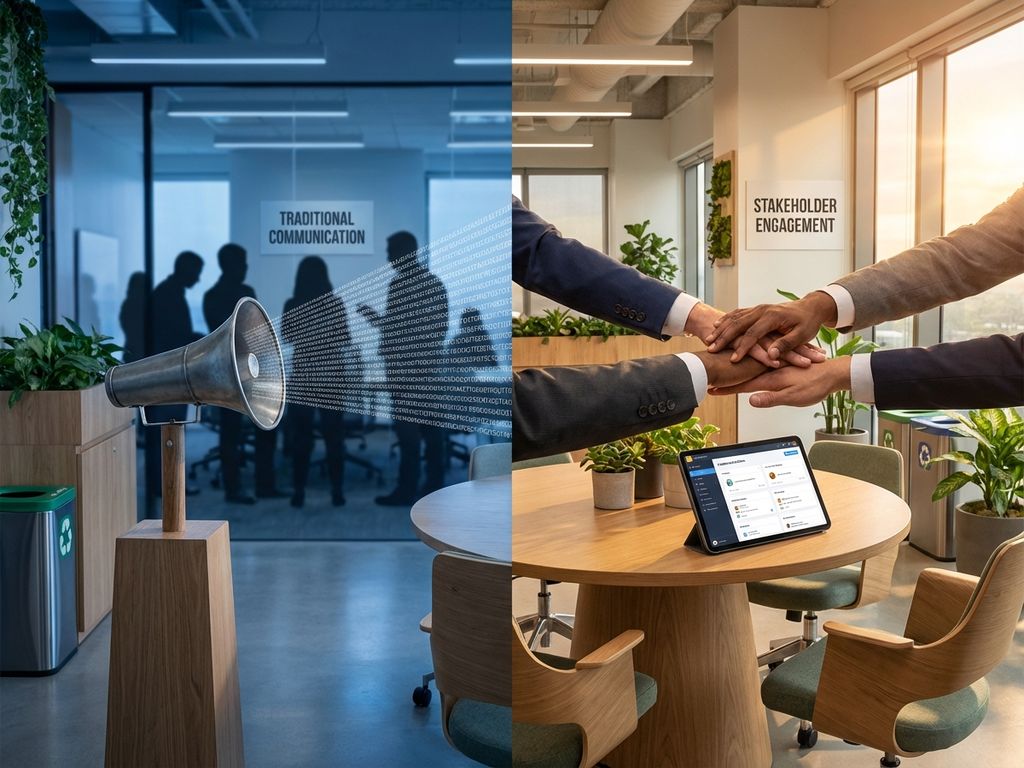
Stakeholder communication is a one-way information-sharing process where organisations inform stakeholders about activities, decisions, and updates. Stakeholder engagement, however, is a two-way interactive process involving dialogue, listening, and collaborative decision-making. The key difference lies in the direction of information flow and the level of participation stakeholders have in shaping outcomes.
What exactly is stakeholder communication and how does it work?
Stakeholder communication involves sharing information with your stakeholders through one-way channels without expecting or facilitating responses. This approach focuses on keeping stakeholders informed about company activities, decisions, and updates through traditional communication methods.
Common stakeholder communication methods include quarterly reports, company newsletters, press releases, annual statements, and announcements. You might send out an email update about new product launches, publish financial results on your website, or distribute policy changes through internal memos. These communications deliver information efficiently to large groups without requiring individual responses or feedback.
This approach works well when you need to share factual information, comply with regulatory requirements, or announce decisions that have already been made. For example, publicly listed companies use stakeholder communication to meet disclosure obligations, while organisations often use it to announce leadership changes or operational updates.
The strength of stakeholder communication lies in its efficiency and consistency. You can reach many people simultaneously with the same message, ensuring everyone receives identical information. However, this method doesn’t capture stakeholder perspectives, concerns, or suggestions that might improve your decisions or build stronger relationships.
What is stakeholder engagement and why does it go beyond communication?
Stakeholder engagement creates two-way dialogue where stakeholders actively participate in discussions, provide feedback, and influence decision-making processes. Unlike communication, engagement involves listening to stakeholder perspectives and incorporating their input into your planning and operations.
This approach recognises that stakeholders have valuable insights, concerns, and ideas that can improve your outcomes. When you engage stakeholders, you invite them to share their experiences, challenge your assumptions, and contribute to solutions. This might involve hosting focus groups with customers, conducting employee feedback sessions, or collaborating with community representatives on sustainable business initiatives.
Engagement builds mutual value by addressing stakeholder needs while advancing your business objectives. For instance, engaging employees in workplace policy development creates better policies while increasing employee satisfaction and buy-in. Similarly, engaging customers in product development leads to better products and stronger customer loyalty.
The collaborative nature of engagement strengthens relationships over time. Stakeholders feel valued when their opinions matter and their contributions make a difference. This builds trust, reduces resistance to change, and creates advocates who support your organisation’s goals.
Engagement also helps you identify issues early, understand stakeholder priorities, and develop solutions that work for everyone involved. This proactive approach prevents problems and creates opportunities for innovation and improvement.
What’s the key difference between stakeholder engagement and stakeholder communication?
The fundamental difference is information flow direction: communication flows one way from organisation to stakeholder, while engagement creates two-way dialogue where both parties share information and influence outcomes.
Communication treats stakeholders as recipients of information. You decide what to share, when to share it, and how to present it. Stakeholders receive your message but don’t contribute to the conversation. This works well for sharing facts, meeting legal requirements, or announcing final decisions.
Engagement treats stakeholders as partners in dialogue. You share information and actively seek their perspectives, ideas, and feedback. Stakeholders become contributors who help shape decisions and solutions. This approach works well when you need input for decision-making, want to build relationships, or face complex challenges requiring multiple perspectives.
Consider a company implementing new environmental policies. Communication would involve announcing the policies through newsletters and reports. Engagement would involve consulting stakeholders about environmental priorities, discussing policy options, gathering feedback on proposals, and incorporating stakeholder input into final policies.
The timing also differs significantly. Communication typically happens after decisions are made to inform stakeholders about outcomes. Engagement happens before and during decision-making to involve stakeholders in the process.
Both approaches serve important purposes in stakeholder management. Effective organisations use communication for information sharing and engagement for relationship building and collaborative decision-making.
How do you know when to communicate versus when to engage with stakeholders?
Choose stakeholder engagement when decisions significantly impact stakeholders, require their expertise, or benefit from their buy-in. Use communication when sharing factual updates, meeting compliance requirements, or announcing decisions that don’t require stakeholder input.
Consider the decision complexity and stakeholder impact level. High-impact decisions affecting stakeholder interests call for engagement. For example, workplace restructuring, community development projects, or product changes affecting customer experience benefit from stakeholder engagement. Low-impact updates like routine financial reports or administrative announcements work well with communication.
Evaluate whether you need stakeholder expertise or perspectives to make better decisions. If stakeholders have relevant knowledge, experience, or insights that could improve your outcomes, choose engagement. When you already have complete information and clear direction, communication suffices.
Think about relationship goals. If you want to build trust, demonstrate respect for stakeholder opinions, or strengthen long-term partnerships, engagement serves these objectives better than one-way communication.
Consider your timeline and resources. Engagement requires more time and effort than communication because it involves dialogue, feedback processing, and potentially multiple rounds of interaction. Communication delivers messages quickly and efficiently when speed matters more than input.
Legal and regulatory requirements also influence your choice. Some situations mandate specific communication approaches, while others require stakeholder consultation or engagement as part of compliance processes.
The stakeholder’s willingness and ability to participate matters too. Some stakeholders prefer receiving information without engagement obligations, while others want active involvement in relevant decisions.
What are the most effective methods for stakeholder engagement versus communication?
Effective stakeholder communication methods include newsletters, reports, websites, press releases, and email updates. For engagement, use surveys, focus groups, workshops, consultation meetings, advisory panels, and collaborative platforms that facilitate two-way interaction.
Communication methods work best when they’re clear, accessible, and tailored to stakeholder preferences. Email newsletters reach stakeholders regularly with updates and news. Annual reports provide comprehensive information about performance and plans. Website updates offer accessible information that stakeholders can access when convenient. Social media announcements reach broad audiences quickly with timely updates.
Choose communication channels based on your stakeholders’ preferences and the type of information you’re sharing. Formal reports work well for detailed financial or operational information. Brief emails suit routine updates. Visual content like infographics helps explain complex information clearly.
Engagement methods should encourage participation and make it easy for stakeholders to contribute meaningfully. Online surveys gather input from many stakeholders efficiently. Focus groups provide detailed feedback from representative stakeholder groups. Workshops enable collaborative problem-solving and planning.
Face-to-face meetings build stronger relationships and enable deeper dialogue, especially for sensitive topics or complex decisions. Virtual meetings offer similar benefits while reducing time and travel requirements. Advisory panels create ongoing engagement opportunities for key stakeholders who can provide regular input.
Digital platforms increasingly support both communication and engagement. Stakeholder portals provide information while enabling feedback submission. Collaboration tools facilitate ongoing dialogue and document sharing. Social platforms enable broader conversations about relevant topics.
Match your methods to stakeholder characteristics and preferences. Busy executives might prefer brief written updates, while community groups might prefer in-person meetings. Technical stakeholders might appreciate detailed reports, while general audiences prefer simplified summaries.
Successful sustainable business practices often combine both approaches strategically, using communication to keep stakeholders informed while employing engagement to involve them in decisions that affect their interests and leverage their expertise.
Understanding when and how to use stakeholder communication versus engagement helps you build stronger relationships, make better decisions, and achieve outcomes that work for everyone involved. At Conscious Business, we help organisations develop comprehensive stakeholder strategies that balance efficient communication with meaningful engagement to support their journey towards holistic business practices.