
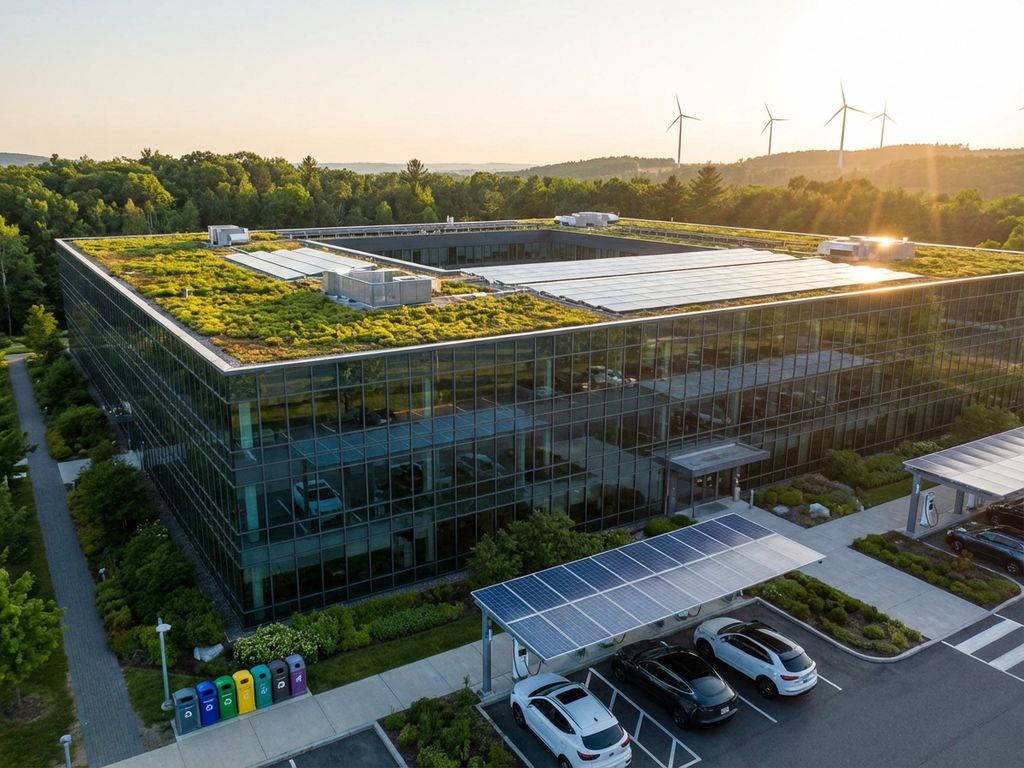
Businesses reduce their environmental footprint through strategic changes across operations, from energy efficiency and waste reduction to sustainable supply chains and employee engagement. This involves both immediate actions like switching to LED lighting and long-term strategies such as renewable energy adoption. Understanding your current impact, prioritising high-impact areas, and measuring progress helps create meaningful environmental improvements while often reducing costs.
What does it actually mean to reduce your business’s environmental footprint?
Your business’s environmental footprint encompasses all the ways your operations impact the planet, including energy consumption, waste production, resource usage, water consumption, and carbon emissions. It covers everything from the electricity powering your office to the transportation methods used in your supply chain and the materials you consume daily.
This concept goes far beyond simple compliance with environmental regulations. Modern sustainable business practices recognise that environmental responsibility is directly connected to long-term profitability and resilience. Companies with smaller environmental footprints often enjoy lower operating costs, stronger brand reputation, and better risk management.
Your environmental impact includes both direct emissions from activities you control (like office heating and company vehicles) and indirect emissions from your supply chain, employee commuting, and the lifecycle of products you purchase. Understanding this full scope helps you identify where changes can make the biggest difference.
The business case for reduction extends beyond environmental benefits. You’ll often discover cost savings through reduced energy bills, waste disposal fees, and resource consumption. Many businesses find that environmental initiatives also improve employee engagement and attract environmentally conscious customers and partners.
Which areas of business operations have the biggest environmental impact?
Energy consumption typically represents the largest environmental impact for most businesses, accounting for heating, cooling, lighting, and powering equipment. Office buildings and manufacturing facilities often consume substantial electricity and gas, making energy efficiency improvements highly effective for footprint reduction.
Transportation creates significant impact through employee commuting, business travel, and supply chain logistics. This includes everything from daily staff journeys to international shipping of materials and products. Companies with extensive travel requirements or complex supply chains often find transportation represents their biggest environmental challenge.
Waste generation affects your footprint through both disposal and the embedded energy in discarded materials. Office paper, packaging materials, food waste, and electronic equipment all contribute to environmental impact through their production, use, and disposal cycles.
Your supply chain amplifies your environmental footprint through the materials, products, and services you purchase. Everything from office supplies and equipment to raw materials carries embedded environmental impact from its production and transportation. Sustainable procurement policies can significantly reduce this indirect impact.
Office operations contribute through water usage, paper consumption, and equipment lifecycle management. While individually smaller, these areas often offer quick wins and help build environmental awareness among your team.
How can businesses start reducing their environmental footprint without breaking the budget?
Energy efficiency improvements offer immediate cost savings alongside environmental benefits. Simple changes like switching to LED lighting, adjusting heating and cooling settings, and unplugging equipment overnight can reduce energy consumption by 10–30% with minimal upfront investment.
Digital transformation reduces both costs and environmental impact by eliminating paper usage, reducing physical storage needs, and enabling remote work. Moving to cloud-based systems, implementing electronic invoicing, and encouraging digital communication can significantly reduce resource consumption while improving efficiency.
Waste reduction programmes cut disposal costs while reducing environmental impact. Start with recycling systems, eliminate single-use items where possible, and work with suppliers to reduce packaging. Many businesses discover substantial cost savings through reduced waste collection fees.
Employee engagement initiatives cost little but create significant impact through behaviour changes. Simple programmes like encouraging reusable cups, promoting cycling to work, or organising car sharing can reduce your footprint while building team awareness and commitment to sustainability.
Smart procurement choices help reduce environmental impact without increasing costs. Choose suppliers with strong environmental credentials, buy recycled or refurbished equipment where appropriate, and consolidate orders to reduce transportation impact. Many sustainable alternatives cost the same as or less than traditional options.
What’s the difference between short-term fixes and long-term environmental strategies?
Short-term fixes deliver immediate environmental improvements with minimal investment and quick implementation. These include switching to LED lighting, implementing paperless processes, adjusting heating and cooling settings, and introducing basic recycling systems. You can typically implement these changes within weeks or months.
Long-term environmental strategies require significant planning, investment, and time but create transformational change. Examples include installing renewable energy systems, overhauling supply chains for sustainability, implementing circular economy principles, or redesigning products for environmental efficiency. These initiatives often take years to fully implement.
Quick wins provide momentum and demonstrate commitment while generating immediate cost savings. They help build internal support for larger environmental initiatives and often fund more substantial investments through the savings they generate.
Strategic initiatives address fundamental business operations and create lasting competitive advantages. Renewable energy installations, for example, provide long-term cost stability and energy independence while significantly reducing environmental impact. Supply chain transformation can reduce costs and risks while improving sustainability.
The most effective approach combines both timeframes. Start with immediate improvements to build momentum and generate savings, then use these successes to justify and fund longer-term strategic investments. This balanced approach maintains progress while building towards transformational change.
How do you measure if your environmental efforts are actually working?
Track energy consumption through monthly utility bills and meter readings to measure the effectiveness of efficiency improvements. Compare usage before and after implementing changes, adjusting for seasonal variations and business growth. Most businesses see 10–30% reductions from basic efficiency measures.
Monitor waste production by measuring the volume and weight of different waste streams. Track recycling rates, food waste reduction, and overall waste disposal costs. Simple methods include counting bin collections or weighing waste categories monthly to identify trends and improvement opportunities.
Carbon footprint measurement provides a comprehensive view of your environmental impact. Calculate emissions from energy use, transportation, and waste using online calculators or carbon accounting software. Many businesses start with simple spreadsheet tracking before investing in specialised tools.
Cost tracking reveals the financial benefits of environmental improvements. Monitor changes in utility bills, waste disposal costs, and resource consumption expenses. Environmental initiatives often generate cost savings that help justify further investments in sustainability measures.
Set specific, measurable targets for improvement and review progress regularly. Examples include reducing energy consumption by 20% within two years or achieving 80% waste recycling rates. Regular measurement helps maintain momentum and identifies areas needing additional attention or different approaches.
Reducing your environmental footprint requires understanding your current impact, prioritising high-impact areas, and implementing both immediate improvements and long-term strategies. Start with cost-effective energy efficiency and waste reduction measures while planning larger investments in renewable energy and sustainable business practices. Regular measurement helps track progress and maintain momentum towards meaningful environmental improvement.
Taking a comprehensive approach to environmental responsibility positions your business for long-term success while contributing to broader sustainability goals. At Conscious Business, we help organisations integrate environmental considerations into their broader transformation towards holistic business practices that benefit all stakeholders.