
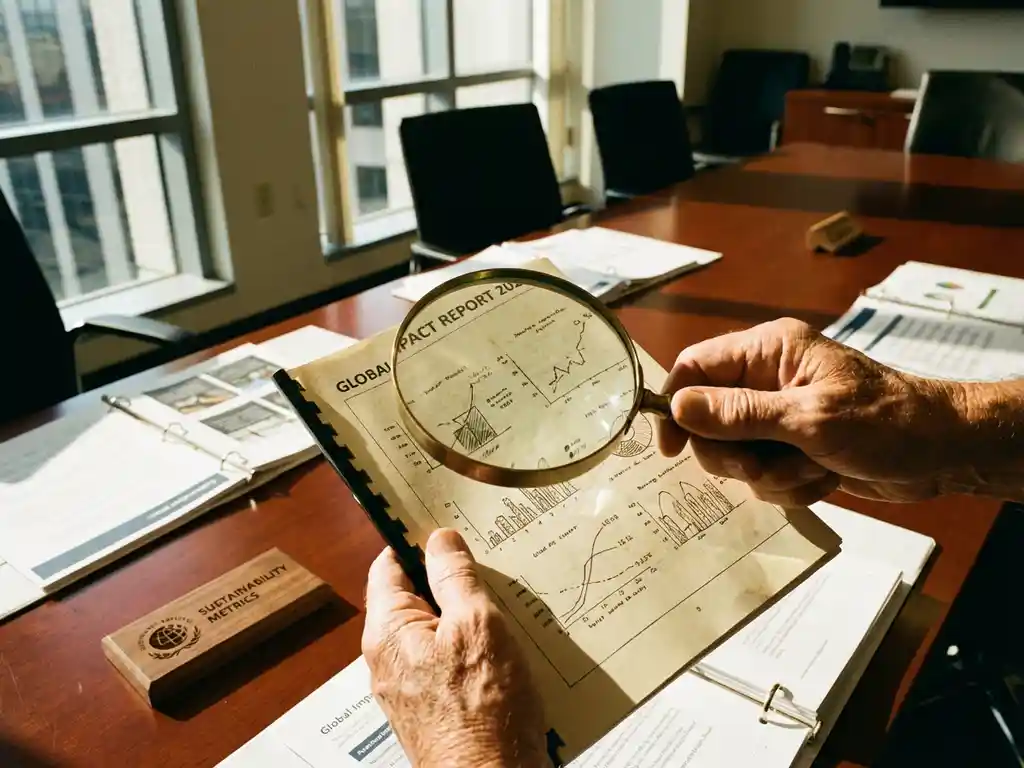
Understanding your company’s true impact requires asking the right questions that reveal how your business affects all stakeholders, not just shareholders. True impact encompasses financial performance, stakeholder value creation, environmental stewardship, and long-term sustainability. These questions help you assess whether your organisation creates genuine value for employees, customers, communities, and society while maintaining profitable operations.
What does ‘true impact’ actually mean for your business?
True impact means creating measurable value for all stakeholders while building a sustainable, profitable business. It goes beyond traditional financial metrics to include social responsibility, environmental stewardship, and long-term value creation for employees, customers, suppliers, communities, and shareholders simultaneously.
Traditional success metrics focus primarily on quarterly earnings, revenue growth, and shareholder returns. However, these measurements miss the bigger picture of how your business affects the world around it. Holistic business assessment considers whether your operations strengthen or weaken the communities, environments, and relationships that support your long-term success.
Consider how your business model creates value. Does it extract maximum profit from stakeholders, or does it generate mutual benefit? Companies measuring true impact track employee engagement, customer loyalty, supplier relationships, community contributions, and environmental footprint alongside financial performance. This comprehensive view reveals whether your business builds lasting value or simply transfers wealth from one group to another.
The shift towards measuring true impact reflects changing market conditions. Talent, innovation, raw materials, and planetary health have become scarcer resources than capital. Businesses that recognise this reality and adapt their operations accordingly often discover that conscious business evaluation leads to stronger financial performance, not weaker results.
Which stakeholders should you be considering when measuring impact?
Your stakeholder ecosystem includes employees, customers, suppliers, shareholders, local communities, and the environment. Each group both affects and is affected by your business operations, creating interconnected relationships that determine your organisation’s long-term viability and success.
Start with your internal stakeholders. Employees represent your most direct impact opportunity. European businesses average only 13% employee engagement compared to 23% globally, yet conscious businesses achieve engagement rates of up to 90%. This dramatic difference translates into productivity, innovation, and retention benefits that directly affect your bottom line.
Your supply chain partners deserve consideration beyond simple cost negotiations. Long-term supplier relationships enable co-innovation and mutual growth. When you understand each other’s deeper needs and challenges, you often discover unexpected opportunities for improvement that benefit both parties.
Customer relationships extend beyond transactions to genuine value creation. Rather than manipulating purchasing decisions, stakeholder impact measurement focuses on building trust through transparency, authenticity, and service that genuinely improves customers’ lives or businesses.
Do not overlook broader community impact. Your operations affect local employment, environmental conditions, and economic development. The communities that support your business deserve consideration in your decision-making processes. Similarly, environmental impact affects everyone’s long-term prospects, including your own business sustainability.
How do you identify what your company’s higher purpose really is?
Your company’s higher purpose answers this question: “How has our business made the world better when we’ve fulfilled our purpose?” It must be ambitious enough that you cannot achieve it alone, requiring stakeholder collaboration and inspiring emotional connection while guiding all organisational decisions.
Begin by examining what your business does beyond making money. Look at the problems you solve, the needs you meet, and the improvements you create in people’s lives or other businesses. Your authentic purpose emerges from the intersection of what you do well, what the world needs, and what genuinely motivates your team.
Engage your leadership team in discovering shared values and aspirations. What originally inspired the business? What achievements make everyone proud? What problems keep you awake at night, not because they threaten profits, but because they represent missed opportunities to contribute meaningfully?
Company purpose evaluation requires honest assessment of your current operations. Does your business model align with your stated values? Are you solving problems that matter, or simply extracting value from existing systems? Purpose-driven companies often discover that their most meaningful work happens when they collaborate with stakeholders to address shared challenges.
Test your purpose statement against real decisions. Does it provide clear guidance when you face difficult choices? Does it inspire employees and attract customers who share similar values? A genuine higher purpose should feel both ambitious and achievable, providing direction for continuous improvement while connecting daily operations to meaningful outcomes.
What questions reveal gaps between your stated values and actual practices?
Honest organisational assessment requires asking whether your business decisions consistently reflect your proclaimed values, especially during challenging situations. The gaps between stated values and actual practices often become visible during crises, competitive pressure, or when short-term profits conflict with long-term principles.
Examine your decision-making processes. When facing difficult choices, do you consider all stakeholders or primarily focus on immediate financial impact? Do your policies and procedures support your stated values, or do they create incentives that contradict your principles? Business transformation questions help identify where systems and values misalign.
Look at your hiring, promotion, and recognition practices. Do you reward behaviour that demonstrates your values, or do results matter more than methods? If someone achieves excellent financial results through practices that contradict your stated values, how does your organisation respond?
Consider your stakeholder relationships during both good times and difficulties. Do you maintain the same standards of fairness, transparency, and collaboration when facing pressure? Many organisations discover that their true values become visible not in their marketing materials, but in how they treat people when circumstances become challenging.
Ask employees, customers, and suppliers about their experiences with your organisation. Their perspectives often reveal gaps that internal assessments miss. Anonymous feedback mechanisms can provide honest insights into whether your stated values translate into consistent daily experiences for those who interact with your business.
How can you measure impact that goes beyond traditional business metrics?
Comprehensive impact measurement combines quantitative metrics like employee engagement scores, customer retention rates, and environmental footprint data with qualitative assessments of stakeholder relationships, community contributions, and cultural health. This holistic business assessment provides a complete picture of your organisation’s true performance.
Develop metrics for each stakeholder group. Employee impact might include engagement surveys, turnover rates, internal promotion percentages, and participation in professional development. Customer impact could encompass satisfaction scores, repeat business rates, referral generation, and genuine value creation measures rather than just transaction volumes.
Environmental and social impact require both direct and indirect measurements. Track your resource consumption, waste generation, and carbon footprint alongside community investment, local employment creation, and supply chain practices. Many businesses discover that environmental improvements also reduce costs and improve operational efficiency.
Create feedback loops that connect impact measurements to business decisions. Regular stakeholder surveys, community engagement sessions, and environmental assessments should inform strategic planning, not just compliance reporting. Sustainable business impact emerges when measurement systems guide continuous improvement rather than simply documenting current performance.
Consider implementing assessment tools that evaluate your organisation across multiple dimensions simultaneously. A comprehensive scan can identify strengths and gaps while providing a personalised development roadmap. This systematic approach ensures that impact measurement leads to meaningful action rather than just data collection.
Understanding your company’s true impact requires commitment to honest assessment and continuous improvement. The questions explored here provide a framework for evaluating how your business affects all stakeholders while building sustainable success. At Conscious Business, we support organisations in this journey through structured assessment tools and development programmes that help businesses realise their potential for positive impact alongside profitable growth. To begin your own comprehensive evaluation and discover your organisation’s current conscious business maturity level, consider taking our Conscious Business Scan for personalised insights and development recommendations.

