
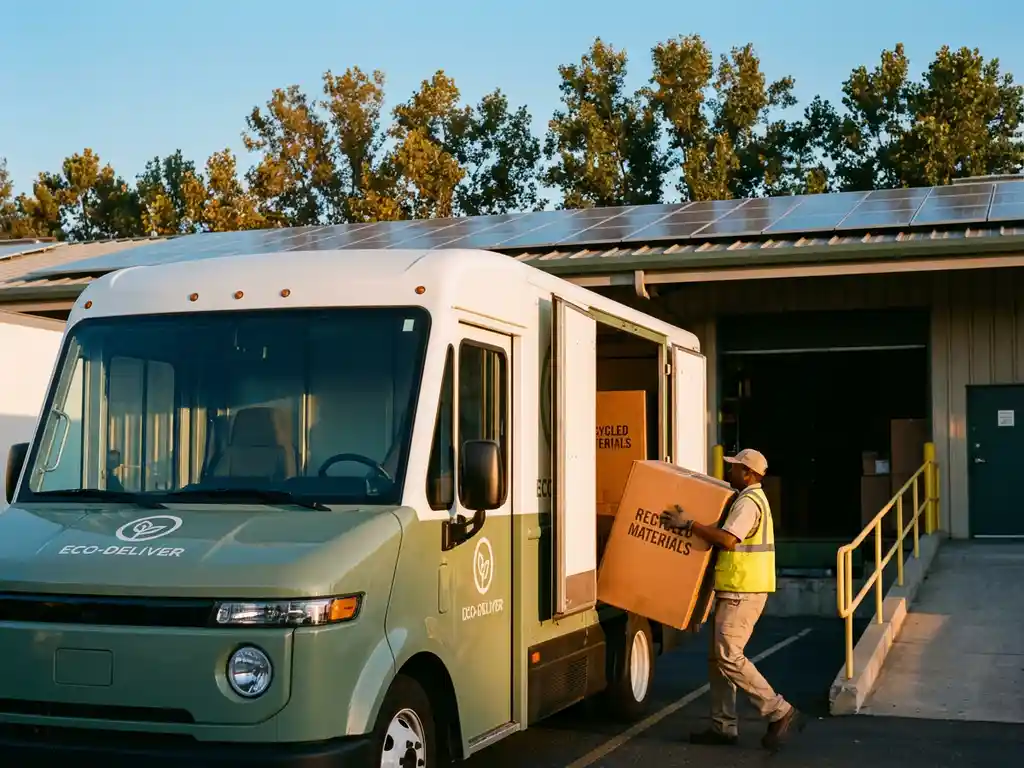
Sustainable logistics combines environmental responsibility with operational efficiency to create long-term value for all stakeholders. It involves reducing carbon emissions, optimising resource use, and building resilient supply chains while maintaining profitability. This comprehensive approach addresses growing regulatory requirements and customer expectations while often reducing costs through improved efficiency.
What does sustainable logistics actually mean for your business?
Sustainable logistics means operating your supply chain in ways that protect the environment, support communities, and ensure economic viability for the long term. This approach balances three interconnected pillars: environmental stewardship through reduced emissions and waste, social responsibility through fair labour practices and community support, and economic sustainability through profitable operations that can continue indefinitely.
The difference between genuine sustainable logistics practices and greenwashing lies in authentic commitment and measurable action. Real sustainability involves systemic changes to how you operate, not just surface-level adjustments for marketing purposes. You are looking at transforming core processes such as route planning, vehicle selection, warehouse operations, and supplier relationships.
For your daily operations, this means making decisions that consider environmental impact alongside traditional metrics such as cost and speed. You might choose electric vehicles for urban deliveries, implement energy-efficient lighting in warehouses, or partner with suppliers who share your environmental values. These choices create ripple effects throughout your entire supply chain, influencing everything from customer loyalty to regulatory compliance.
Sustainable logistics also means building resilience into your operations. Climate change and resource scarcity create supply chain risks that traditional logistics models often ignore. By adopting sustainable practices now, you are preparing your business for future challenges while often discovering immediate benefits such as reduced fuel costs and improved efficiency.
Why should logistics companies prioritise sustainable operations now?
Logistics companies face mounting pressure from multiple directions to adopt sustainable practices. Regulatory frameworks such as the Corporate Sustainability Reporting Directive (CSRD) now require many companies to report on environmental and social impact, making sustainability a compliance necessity rather than just a nice-to-have feature.
Customer expectations have shifted dramatically. Both B2B and B2C customers increasingly choose logistics partners based on environmental credentials. Major retailers and manufacturers are setting carbon-neutral targets for their entire supply chains, meaning they will only work with logistics providers who can demonstrate genuine environmental logistics practices.
The economic case for sustainable logistics has become compelling. Rising fuel costs make energy-efficient operations financially attractive. Carbon pricing mechanisms in many regions add direct costs to high-emission activities. Meanwhile, sustainable practices often reveal operational inefficiencies you did not know existed, leading to cost savings that go beyond environmental benefits.
Early adopters gain competitive advantages that become harder to replicate over time. You can secure partnerships with sustainability-focused customers, attract environmentally conscious employees, and build brand reputation that commands premium pricing. Companies that wait often find themselves playing catch-up in markets where sustainable logistics has become the baseline expectation.
Technological advances have made sustainable options more practical and affordable. Electric vehicles now offer viable ranges for many delivery routes. Route optimisation software can reduce fuel consumption while improving delivery times. Green warehouse technologies provide better working conditions alongside environmental benefits.
How can logistics companies reduce their environmental footprint?
Route optimisation represents one of the most immediate opportunities for reducing environmental impact. Modern software can calculate the most efficient routes, taking into account traffic patterns, delivery windows, and vehicle capacity. This approach typically reduces fuel consumption by 10–20% while improving delivery performance and reducing driver stress.
Vehicle selection plays a crucial role in carbon neutral shipping strategies. Electric vehicles work well for urban deliveries with predictable routes. Hybrid vehicles offer benefits for mixed urban and highway operations. For long-haul transport, consider newer diesel engines with advanced emission controls or explore alternative fuels such as biodiesel or hydrogen where infrastructure permits.
Warehouse energy management offers substantial environmental and cost benefits. LED lighting systems use significantly less energy than traditional options while providing better working conditions. Smart heating and cooling systems adjust automatically based on occupancy and weather conditions. Solar panels can offset electricity consumption, particularly in facilities with large roof areas suitable for installation.
Packaging optimisation reduces waste throughout the supply chain. Right-sizing packages eliminates unnecessary materials while maximising vehicle loading efficiency. Reusable packaging systems work well for regular routes between fixed locations. Biodegradable or recyclable materials reduce end-of-life environmental impact.
Modal shift strategies involve choosing the most environmentally appropriate transport method for each shipment. Rail transport produces lower emissions per tonne-kilometre than road transport for longer distances. Consolidating shipments reduces the number of vehicles needed. Intermodal solutions combine different transport modes to optimise both environmental impact and cost-effectiveness.
What are the biggest challenges logistics companies face when going green?
Upfront investment costs create the most immediate barrier to sustainable logistics adoption. Electric vehicles typically cost more than conventional alternatives, although operating costs are often lower. Warehouse efficiency improvements require capital investment before delivering savings. Many companies struggle to justify these investments using traditional short-term financial metrics.
Technology integration challenges complicate sustainable logistics implementation. New systems must work with existing warehouse management, transport planning, and customer communication platforms. Staff need training on new equipment and processes. Data integration across different systems can be complex, particularly when combining sustainability metrics with operational performance indicators.
Stakeholder resistance often emerges from different sources within and outside your organisation. Drivers may resist electric vehicles due to range anxiety or charging concerns. Customers might worry about service reliability during transitions. Investors may question returns on sustainable freight investments. Managing these concerns requires clear communication about benefits and realistic timelines.
Measurement difficulties make it hard to track progress and justify continued investment. Environmental impact calculations can be complex, particularly when considering indirect effects throughout the supply chain. Different sustainability standards and reporting requirements create confusion about which metrics matter most. Without clear measurement, it is difficult to optimise sustainable logistics practices.
Balancing sustainability with operational efficiency requires careful planning and sometimes involves trade-offs. Electric vehicles may have a more limited range than diesel alternatives. Sustainable packaging might be more expensive or less protective. Route optimisation for emissions reduction might conflict with delivery time requirements. Successfully managing these tensions requires clear priorities and creative problem-solving.
How do you measure sustainability progress in logistics operations?
Key performance indicators for sustainable logistics should cover environmental, social, and economic dimensions. Environmental metrics include carbon emissions per delivery, fuel consumption per kilometre, waste generation, and energy usage per square metre of warehouse space. These measurements provide concrete data about your environmental impact and help identify improvement opportunities.
Social sustainability metrics focus on working conditions, community impact, and stakeholder relationships. Track employee satisfaction scores, safety incident rates, local supplier percentages, and community investment levels. These indicators help ensure your sustainable delivery methods benefit people as well as the planet.
Economic sustainability requires monitoring both traditional financial metrics and long-term value creation. Measure cost per delivery, return on sustainability investments, customer retention rates, and brand value indicators. This comprehensive approach demonstrates that sustainable logistics can enhance rather than compromise financial performance.
Measurement tools range from simple spreadsheet tracking to sophisticated sustainability management software. Many companies start with basic fuel consumption and emissions calculations before expanding to more comprehensive systems. Choose tools that integrate with your existing operations management systems to avoid creating additional administrative burden.
Reporting standards help ensure consistency and credibility in your sustainability communications. The Global Reporting Initiative (GRI) provides frameworks for sustainability reporting. CDP (formerly the Carbon Disclosure Project) offers specific guidance for emissions reporting. Following established standards makes your progress comparable with industry benchmarks and builds stakeholder confidence.
Continuous improvement approaches ensure your sustainable logistics practices evolve over time. Regular reviews of performance data help identify new opportunities and address emerging challenges. Benchmarking against industry leaders reveals best practices you can adapt. Employee feedback often highlights practical improvements that data alone might miss.
Creating a framework for measuring sustainability progress transforms good intentions into concrete results. Start with a few key metrics that align with your business priorities, then expand your measurement system as you gain experience. Remember that measurement serves improvement, not just reporting. Use your data to guide decisions and celebrate progress while identifying areas for continued development.
Sustainable logistics represents both a business necessity and an opportunity for competitive advantage. Companies that embrace this transition thoughtfully, measuring progress and adapting practices based on real results, position themselves for long-term success in an increasingly sustainability-focused marketplace. At Conscious Business, we help logistics companies navigate this transformation through our structured approach that balances environmental responsibility with operational excellence and financial performance. Ready to start your sustainability journey? YOUR ANCHORWORD to discover how our comprehensive assessment can guide your path to sustainable logistics success.
Related Articles
- What is the connection between CSRD compliance and business strategy?
- What are the challenges of conscious AI adoption in HR?
- How to Align Your Company's Purpose Directly With Its Profitability
- How does conscious business affect long-term profitability?
- How do conscious businesses handle operational trade-offs?