
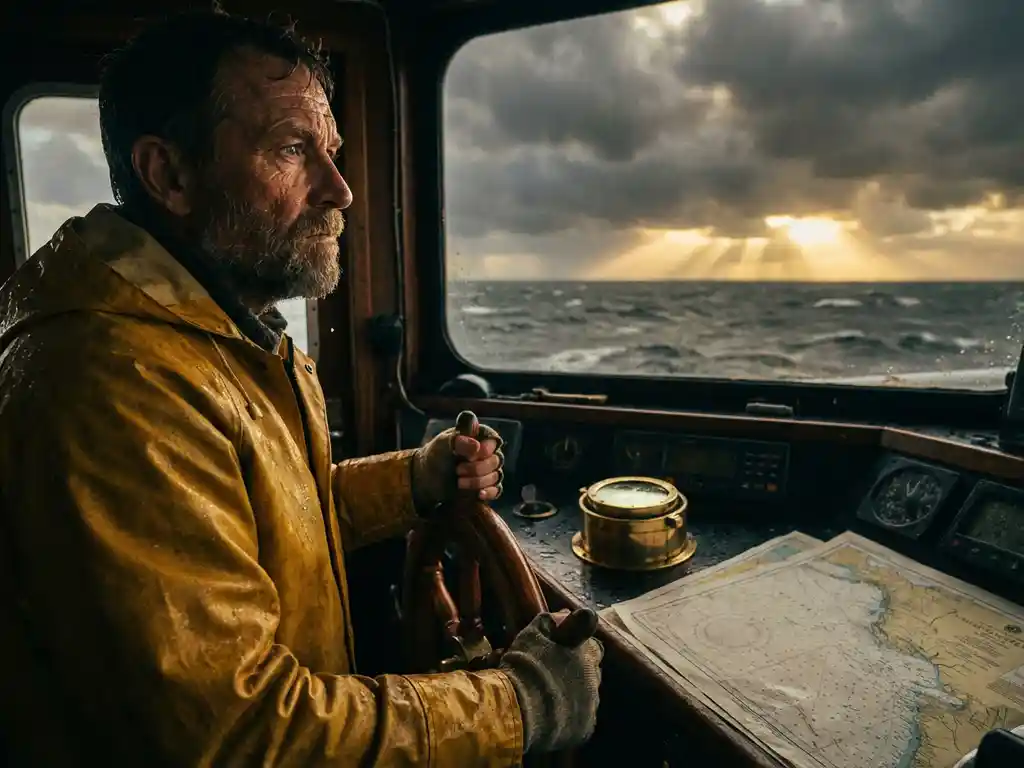
Conscious businesses navigate economic downturns by prioritising stakeholder relationships and long-term value creation over short-term profit maximisation. They maintain their higher purpose as a guiding principle, leverage stronger stakeholder partnerships for resilience, and use transparent communication to build trust during uncertainty. This stakeholder-centric approach often provides greater stability and adaptability when economic conditions become challenging.
What makes conscious businesses different during economic downturns?
Conscious businesses approach economic challenges with a stakeholder-centric decision-making process rather than focusing solely on shareholder returns. Unlike traditional companies that may cut costs aggressively or abandon sustainability initiatives during downturns, conscious businesses maintain their commitment to all stakeholders, including employees, suppliers, customers, communities, and the environment.
The fundamental difference lies in their long-term value creation mindset. Traditional businesses often operate under Milton Friedman’s shareholder capitalism model, where maximising shareholder returns takes precedence. However, conscious business economic downturn strategies recognise that today’s scarcest resources are talent, innovation, raw materials, and planetary health rather than just capital.
This approach manifests in practical ways during crises. When XVR Simulation faced declining revenue during COVID-19, investors demanded layoffs. Instead of following conventional wisdom, leadership redirected idle employees to develop products for the police market, discovering a new segment as large as their existing fire services market. This decision preserved talent whilst creating new opportunities.
Conscious businesses also embrace what’s known as “the magic factor” – unexpected positive synergies that emerge from holistic thinking. During downturns, these companies often discover innovative solutions precisely because they consider all stakeholder impacts rather than making isolated financial decisions.
How do conscious businesses maintain their higher purpose when facing financial pressure?
Conscious businesses maintain their higher purpose during financial pressure by using it as a decision-making framework rather than abandoning it as a luxury. Their higher purpose serves as an anchor that guides resource allocation and strategic choices, even when conventional wisdom suggests focusing purely on financial survival.
Purpose-driven business recession strategies involve transparent stakeholder communication about challenges whilst reinforcing commitment to core values. This approach builds trust rather than eroding it. Companies communicate openly about difficulties while explaining how their response aligns with their fundamental mission.
The key lies in reframing financial pressure as an opportunity to demonstrate authentic commitment. When Auping developed their fully recyclable mattress, recycling wasn’t even a customer priority – it ranked 14th in purchase decisions. However, driven by their purpose of environmental responsibility, they felt accountable for the 1.5 million mattresses discarded annually in the Netherlands alone.
Practical strategies include establishing clear criteria for decision-making that honour both financial reality and purpose commitments. This might involve asking: “How can we address this financial challenge in a way that strengthens rather than compromises our higher purpose?” Often, this questioning reveals innovative solutions that wouldn’t emerge from purely financial analysis.
Companies also maintain purpose by engaging stakeholders in problem-solving. Rather than making unilateral cuts, they involve employees, suppliers, and customers in finding creative solutions that serve everyone’s interests whilst addressing financial constraints.
Why do conscious businesses often show more resilience during recessions?
Conscious businesses demonstrate greater resilience during recessions because they’ve built stronger stakeholder relationships that provide multiple forms of support during challenging times. Their holistic business model creates diversified value streams and deeper partnerships that offer stability when traditional revenue sources face pressure.
Research from Firms of Endearment shows that companies meeting conscious business criteria outperformed the S&P 500 by 14 times over 15 years (1998–2013), with particularly strong performance after crises. This conscious business resilience stems from several structural advantages.
Their stakeholder-approach recession strategy creates what economists call “relationship capital.” Employees with high engagement levels (conscious businesses achieve up to 90% engagement versus Europe’s 13% average) are more likely to contribute extra effort during difficulties. Suppliers view these companies as preferred partners worth supporting through tough periods. Customers maintain loyalty because they trust the company’s authentic commitment to their wellbeing.
The sustainable business crisis management approach also reduces vulnerability to external shocks. Companies operating within planetary boundaries and maintaining ethical supply chains face fewer regulatory risks and resource constraints. Their focus on circular economy principles, like Auping’s fully recyclable mattresses or Dutch Climate Systems’ air conditioners that can be remanufactured 10 times over a 200-year lifespan, creates more predictable cost structures.
Additionally, their innovation capacity tends to be higher because diverse perspectives and purpose-driven motivation spark creativity. During crises, this translates into finding novel solutions that purely profit-focused companies might miss.
What specific strategies do conscious leaders use to navigate economic uncertainty?
Conscious leaders navigate economic uncertainty through transparent communication, collaborative problem-solving, and adaptive planning that maintains stakeholder trust whilst addressing financial realities. They operate from higher consciousness levels characterised by emotional intelligence and systems thinking rather than reactive decision-making.
Conscious leadership downturn strategies begin with honest stakeholder communication about challenges and opportunities. Leaders share both difficulties and their commitment to finding solutions that honour all stakeholders. This transparency builds trust and often reveals unexpected support and creative solutions from stakeholders.
They employ collaborative problem-solving by engaging stakeholders in finding solutions. Rather than making top-down decisions about cost-cutting, conscious leaders ask: “How can we navigate this challenge together in ways that strengthen our relationships and purpose?” This approach often uncovers innovative alternatives to traditional crisis responses.
Adaptive planning involves maintaining strategic flexibility whilst staying true to core purpose. Leaders use their higher purpose as a north star for decision-making, asking how each choice moves them closer to or further from their ultimate mission. This framework helps distinguish between necessary adaptations and compromises that would undermine long-term success.
Conscious leaders also practise what’s called “rationality about facts while honouring emotions and intuition.” They acknowledge the emotional impact of uncertainty on stakeholders whilst making fact-based decisions. This balanced approach maintains team cohesion and stakeholder confidence during turbulent periods.
They recognise that “we see the world as we are, not as it is,” emphasising the need for diverse perspectives in decision-making. During uncertainty, this translates into actively seeking input from various stakeholders and avoiding the tunnel vision that often accompanies crisis situations.
Finally, conscious leaders view economic uncertainty as an opportunity to demonstrate authentic commitment to their values. They understand that how they navigate challenges defines their character and builds the foundation for future success. This long-term perspective helps them make decisions that may be difficult in the short term but strengthen stakeholder relationships and competitive position over time.
The holistic business model crisis approach recognises that economic downturns, whilst challenging, can actually accelerate the transition to more conscious business practices. Companies that embrace stakeholder value during economic crises often emerge stronger, with deeper relationships and more innovative solutions that serve them well in recovery and growth phases.
At Conscious Business, we support organisations through this journey with tools like our CB Scan, which helps companies assess their current conscious business practices and identify opportunities for building greater resilience. The path forward isn’t about choosing between financial success and stakeholder value – it’s about recognising that in today’s economy, they’re increasingly interdependent.