
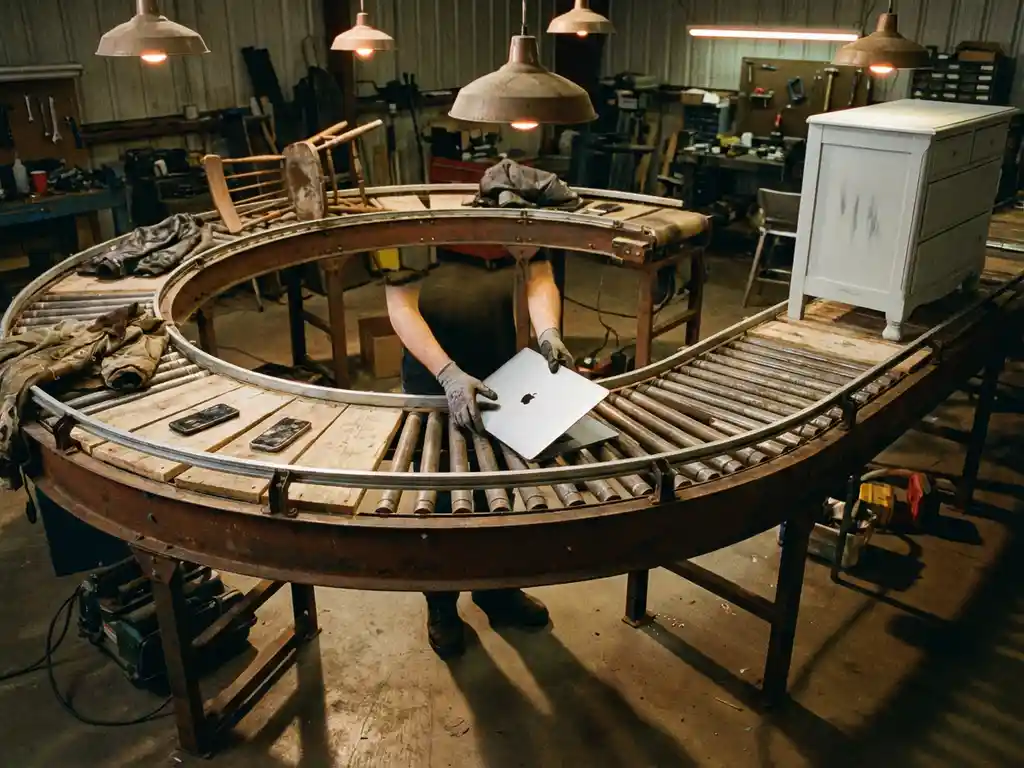
The circular economy is a business model that keeps materials and products in use for as long as possible, eliminating waste through design and regeneration. Unlike traditional linear models that follow a “take-make-dispose” pattern, circular approaches create closed loops where resources continuously cycle back into productive use. This shift helps businesses reduce costs, create new revenue streams, and build resilience while addressing environmental challenges.
What is the circular economy and why does it matter for businesses?
The circular economy is an economic system designed to eliminate waste and keep resources in continuous use through regenerative practices. Instead of the traditional linear model where you extract materials, make products, and dispose of them, circular systems create closed loops where materials flow back into production cycles.
Traditional linear business models follow a straightforward path: extract raw materials, manufacture products, sell them, and eventually they end up in landfills. This approach assumes infinite resources and unlimited waste capacity. Circular models challenge this assumption by designing out waste from the beginning and keeping materials at their highest value for as long as possible.
The shift matters for businesses because resource scarcity and waste disposal costs continue to rise. Companies adopting circular approaches often discover new revenue opportunities through services, refurbishment, and material recovery. They also build stronger relationships with customers through longer-lasting products and innovative service models.
Beyond cost considerations, circular thinking helps businesses future-proof their operations. Regulations around waste and resource use are tightening globally. Companies that embed circular principles early position themselves ahead of regulatory requirements while building competitive advantages through resource efficiency.
How does the circular economy actually work in practice?
Circular economy mechanisms operate through several interconnected strategies that keep materials and products cycling through the economy rather than ending up as waste. The system works by designing durability into products, creating sharing platforms, offering services instead of products, and establishing effective recycling processes.
Design for durability and repairability forms the foundation. Companies create products that last longer and can be easily repaired, upgraded, or refurbished. This might mean using modular designs where individual components can be replaced, or choosing materials that maintain quality through multiple use cycles.
Sharing platforms maximise the use of existing products by connecting people who need access with those who own assets. Car-sharing services, tool libraries, and equipment rental platforms all demonstrate how one product can serve multiple users, reducing the total number of items needed.
Product-as-a-service models shift the focus from selling products to providing outcomes. Instead of buying a washing machine, customers might pay for clean clothes. This incentivises manufacturers to create durable, efficient products because they remain responsible for maintenance and performance throughout the product lifecycle.
Material recovery happens through recycling and upcycling processes that capture value from products at the end of their useful life. Effective circular systems design these recovery processes from the beginning, ensuring materials can be easily separated and reprocessed into new products.
What’s the difference between circular economy and sustainability?
The circular economy is a specific approach within the broader concept of sustainability, focusing primarily on resource flows and waste elimination. While sustainability encompasses environmental, social, and economic considerations, the circular economy specifically addresses how materials move through economic systems.
Sustainability takes a comprehensive view of business impact, including carbon emissions, social equity, biodiversity, and long-term economic viability. It asks whether business practices can continue indefinitely without depleting natural or social resources. A sustainable business considers its effects on all stakeholders and future generations.
The circular economy concentrates on closing material loops and designing out waste. It is essentially about resource efficiency and system design. You can think of it as one important strategy within a broader sustainable business approach, specifically targeting the “take-make-dispose” problem.
Many sustainable business practices complement circular approaches. Renewable energy use, fair labour practices, and community investment all contribute to sustainability but are not specifically circular. Similarly, some circular practices might not address all sustainability concerns. A product could be perfectly recyclable but still have high carbon emissions during production.
The most effective sustainable businesses integrate circular principles with other sustainability strategies. They design circular material flows while also considering energy sources, social impact, and long-term economic viability. This integrated approach addresses both resource efficiency and broader sustainability goals.
How can businesses transition to circular economy models?
Businesses can transition to circular models by starting with an assessment of current material flows, identifying circular opportunities, and implementing changes gradually. The process begins with understanding where materials enter and exit your business, then redesigning systems to capture more value from these flows.
Begin by mapping your current resource use and waste streams. Track materials from procurement through to disposal, identifying where value gets lost. Look for opportunities where waste from one process could become input for another, or where products could be designed for longer life cycles.
Identify your most promising circular opportunities based on feasibility and impact. You might start with simple changes like switching to reusable packaging, or more complex shifts like developing service-based business models. Consider your industry context, customer expectations, and available resources when prioritising initiatives.
Develop partnerships with suppliers, customers, and other businesses to create circular flows. Circular systems often require collaboration across multiple organisations. You might need suppliers who can take back materials, customers willing to participate in return programmes, or partners who can process your waste into useful inputs.
Start with pilot projects to test circular approaches before full implementation. This allows you to understand practical challenges, refine processes, and demonstrate value to stakeholders. Many businesses begin with internal circular flows before expanding to customer-facing programmes.
Common challenges include upfront investment requirements, customer education needs, and coordination complexity. Circular systems often require different infrastructure, new partnerships, and changed customer behaviours. Plan for these challenges and build support gradually through demonstrated benefits.
What are the real benefits and challenges of circular business models?
Circular business models offer significant cost savings, new revenue opportunities, and reduced environmental impact, but they also require substantial upfront investment, operational changes, and market education. Understanding both sides helps businesses make realistic implementation decisions.
Cost savings emerge from reduced material purchases, lower waste disposal fees, and improved resource efficiency. Companies often find they need fewer raw materials when they recover and reuse materials effectively. Waste disposal costs decrease as less material leaves the system, and energy efficiency often improves through better design.
New revenue streams develop through services, refurbishment, and material sales. Product-as-a-service models can provide steady recurring income. Refurbishment and resale programmes capture additional value from products. Material recovery operations can generate income from what was previously waste.
Environmental benefits include reduced resource extraction, lower emissions, and decreased pollution. Circular approaches typically require less energy than producing new materials from scratch. They also reduce pressure on natural ecosystems by decreasing demand for virgin resources.
Implementation challenges start with significant upfront investments. Circular systems often require new equipment, facilities, and technology. You might need reverse logistics capabilities, processing equipment, or digital platforms to coordinate circular flows. These investments take time to pay back through operational savings.
Market education represents another substantial challenge. Customers may need convincing to participate in return programmes, accept refurbished products, or pay for services instead of owning products. Building these new behaviours requires patience and consistent communication about benefits.
Operational complexity increases when managing circular flows. You are coordinating material returns, quality assessment, processing, and redistribution alongside traditional business operations. This requires new skills, systems, and partnerships that take time to develop effectively.
Understanding where your business sits within its broader system helps identify the most relevant circular opportunities. At Conscious Business, we help organisations assess their current practices and develop strategies that align circular approaches with their specific context and stakeholder needs. The transition to circular models works best when integrated with a holistic view of sustainable business development.