
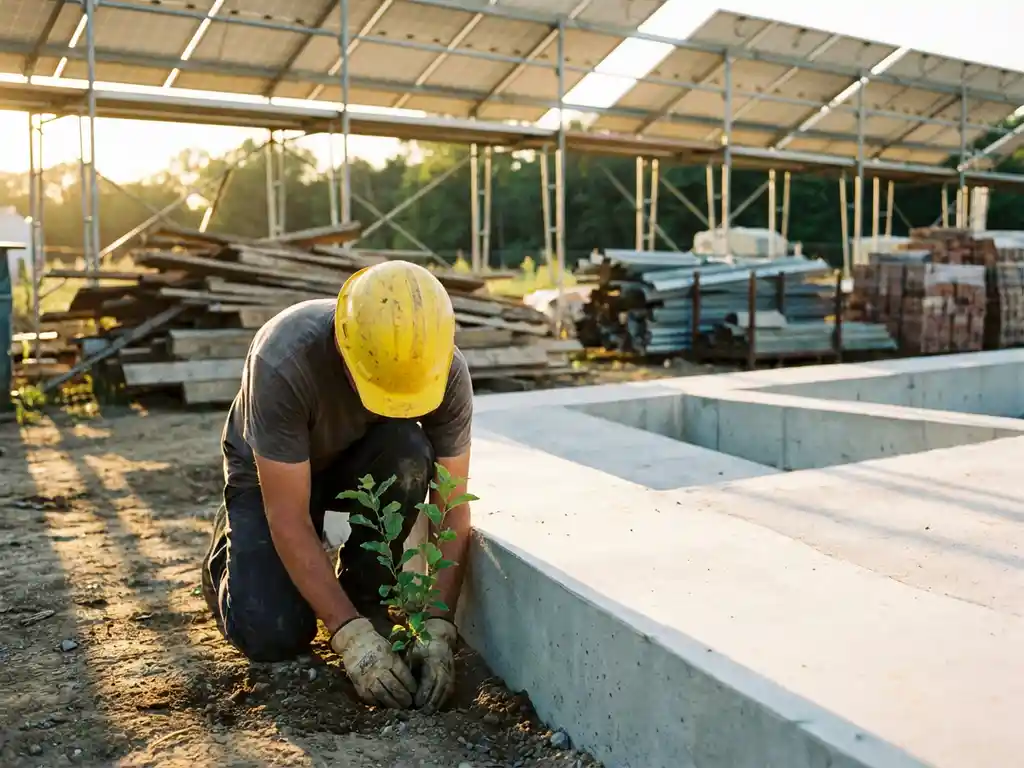
Construction companies can operate more consciously by shifting from a profit-only focus to stakeholder-inclusive approaches that balance financial success with social and environmental responsibility. This involves implementing sustainable building practices, engaging all stakeholders meaningfully, and measuring success through multiple metrics beyond profit margins. Conscious construction creates value for workers, communities, clients, and the environment simultaneously.
What does it mean for a construction company to operate consciously?
Conscious construction means operating with a higher purpose that goes beyond profit maximisation to create value for all stakeholders. Construction companies adopting this approach ask themselves, “How has our business made the world better when we’ve fulfilled our purpose?” rather than simply focusing on quarterly returns.
This paradigm shift recognises that the conditions justifying traditional shareholder capitalism have changed. In construction, talent, innovation, sustainable materials, and environmental health have become scarcer resources than capital. Companies embracing conscious construction practices integrate five fundamental pillars into their operations.
The first pillar involves establishing a higher purpose that inspires stakeholders and guides decisions. For construction companies, this might mean committing to building communities that enhance quality of life or creating structures that actively contribute to environmental restoration.
Conscious leadership forms the second pillar, where leaders operate with greater emotional intelligence and make decisions considering long-term impacts on all stakeholders. This approach often requires moving beyond traditional hierarchical structures towards more collaborative decision-making processes.
The remaining pillars encompass stakeholder inclusion, sustainable business model innovation, and developing an organisational culture based on shared values such as transparency, integrity, and environmental stewardship. Together, these elements create construction businesses that generate profit whilst actively benefiting people and the planet.
Why should construction companies care about conscious business practices?
Construction companies adopting conscious practices achieve superior long-term returns whilst building greater crisis resilience and attracting top talent. Research shows conscious businesses can achieve up to 90% employee engagement compared to the European average of just 13%, directly impacting productivity and project quality.
Regulatory pressures are intensifying across Europe, with new sustainability requirements and extended producer responsibility legislation. Companies that proactively adopt conscious practices position themselves ahead of regulatory changes rather than scrambling to comply reactively. This proactive approach reduces compliance costs and regulatory risks.
Client demands are evolving rapidly, particularly among younger demographics who prioritise environmental and social impact alongside traditional metrics such as cost and timeline. Construction companies with authentic sustainability credentials and stakeholder-inclusive approaches win more projects and command premium pricing.
Talent attraction represents another compelling business case. The construction industry faces significant skills shortages, and conscious companies consistently outperform competitors in attracting and retaining skilled workers. Purpose-driven organisations inspire loyalty and reduce costly turnover.
Risk mitigation benefits include improved supply chain resilience, reduced environmental liabilities, and stronger community relationships that prevent project delays. Conscious construction companies also demonstrate enhanced innovation capacity, developing creative solutions through diverse stakeholder perspectives and collaborative approaches.
How can construction companies include all stakeholders in their decision-making?
Effective stakeholder inclusion starts with comprehensive stakeholder mapping that identifies all parties affected by construction projects: workers, local communities, clients, suppliers, subcontractors, regulatory bodies, and environmental systems. Each stakeholder group requires tailored engagement strategies that address its specific needs and concerns.
For workers, meaningful inclusion involves safety committees with real decision-making authority, transparent communication about project goals and challenges, and opportunities for skill development. Construction companies can implement value-based decision-making frameworks in which safety and worker wellbeing considerations carry equal weight with cost and timeline factors.
Community engagement requires early consultation before project planning is finalised, regular communication throughout construction phases, and genuine consideration of community feedback in project modifications. This might include adjusting construction schedules to minimise disruption during local events or incorporating community-requested features into public projects.
Supplier and subcontractor inclusion involves building long-term partnerships rather than purely transactional relationships. Conscious construction companies share project purposes with their supply chain, collaborate on innovation opportunities, and support supplier development in sustainability practices.
Environmental considerations require treating natural systems as stakeholders with legitimate interests. This includes conducting thorough environmental impact assessments, implementing regenerative construction practices where possible, and designing buildings that contribute positively to local ecosystems.
Client inclusion goes beyond meeting specifications to understanding deeper needs and co-creating solutions that deliver unexpected value. This collaborative approach often reveals opportunities for enhanced functionality, reduced lifecycle costs, or improved user experience.
What are the biggest challenges construction companies face when transitioning to conscious practices?
Cost concerns represent the most frequently cited obstacle, with many construction companies fearing that conscious practices will reduce competitiveness through higher expenses. However, this reflects short-term thinking that fails to account for long-term benefits such as reduced waste, improved efficiency, and premium pricing opportunities for sustainable construction services.
Industry resistance stems from construction’s traditionally conservative culture and established practices. Many stakeholders, from clients to subcontractors, may initially resist changes to familiar processes. Overcoming this requires demonstrating tangible benefits and gradually building trust through successful project outcomes.
Regulatory complexity creates confusion about which sustainability standards to adopt and how to navigate varying requirements across different jurisdictions. Construction companies often struggle to balance multiple certification systems, environmental regulations, and stakeholder expectations simultaneously.
Supply chain challenges emerge when trying to source sustainable materials or work with suppliers who share conscious business values. Limited availability of certain sustainable materials, higher costs for eco-friendly alternatives, and difficulty verifying supplier practices create practical implementation barriers.
Cultural transformation within traditional construction environments requires significant time and effort. Moving from hierarchical, profit-focused cultures to collaborative, purpose-driven approaches involves changing deeply ingrained behaviours and decision-making processes.
Skills gaps present another significant challenge, as conscious construction requires new competencies in sustainability assessment, stakeholder engagement, and systems thinking. Many construction professionals need additional training to implement conscious business practices effectively.
How do you measure success in conscious construction beyond profit margins?
Conscious construction success requires multiple metrics that capture value creation across all stakeholder groups. Financial performance remains important but becomes one dimension within a broader framework that includes worker safety, community benefit, environmental impact, client satisfaction, and long-term business sustainability.
Worker safety and wellbeing metrics include accident rates, near-miss reporting frequency, worker satisfaction scores, and retention rates. Conscious construction companies often achieve significantly lower accident rates whilst maintaining higher productivity through engaged, well-trained teams.
Community impact measurement involves assessing local economic benefits, community satisfaction surveys, and contributions to local infrastructure or social programmes. This might include tracking local employment creation, supplier diversity, or community facility improvements.
Environmental metrics encompass carbon footprint reduction, waste diversion rates, water usage efficiency, and biodiversity impact assessments. Advanced conscious construction companies measure regenerative impacts, tracking how projects contribute to environmental restoration rather than simply minimising harm.
Client satisfaction extends beyond project completion to include lifecycle value delivery, building performance against sustainability targets, and long-term relationship development. This holistic approach often reveals opportunities for ongoing value creation through maintenance, upgrades, or additional projects.
Business sustainability indicators include employee engagement scores, innovation pipeline strength, stakeholder relationship quality, and resilience during market downturns. Conscious construction companies typically demonstrate greater stability and more consistent growth than traditional competitors.
The key lies in recognising these metrics as interconnected rather than competing priorities. When construction companies align stakeholder success with business success, they create positive feedback loops in which improved performance in one area reinforces success across all dimensions.
Transitioning to conscious construction practices represents both an opportunity and a necessity for forward-thinking construction companies. The shift requires commitment, patience, and systematic implementation across all business dimensions. However, companies making this transition position themselves for long-term success whilst contributing meaningfully to solving pressing social and environmental challenges. At Conscious Business, we support construction companies through this transformation with practical tools, peer learning opportunities, and structured development programmes designed specifically for the unique challenges of the construction industry. To begin your conscious business journey, take our Conscious Business scan to assess your current position and identify key areas for development.
Related Articles
- What is the relationship between conscious AI and business profitability?
- What are the benefits of systemic conscious business evaluation?
- What are the stages of AI-powered conscious transformation?
- How to Lead Through Uncertainty Without Losing Your Team's Trust
- What role does middle management play in conscious culture?