
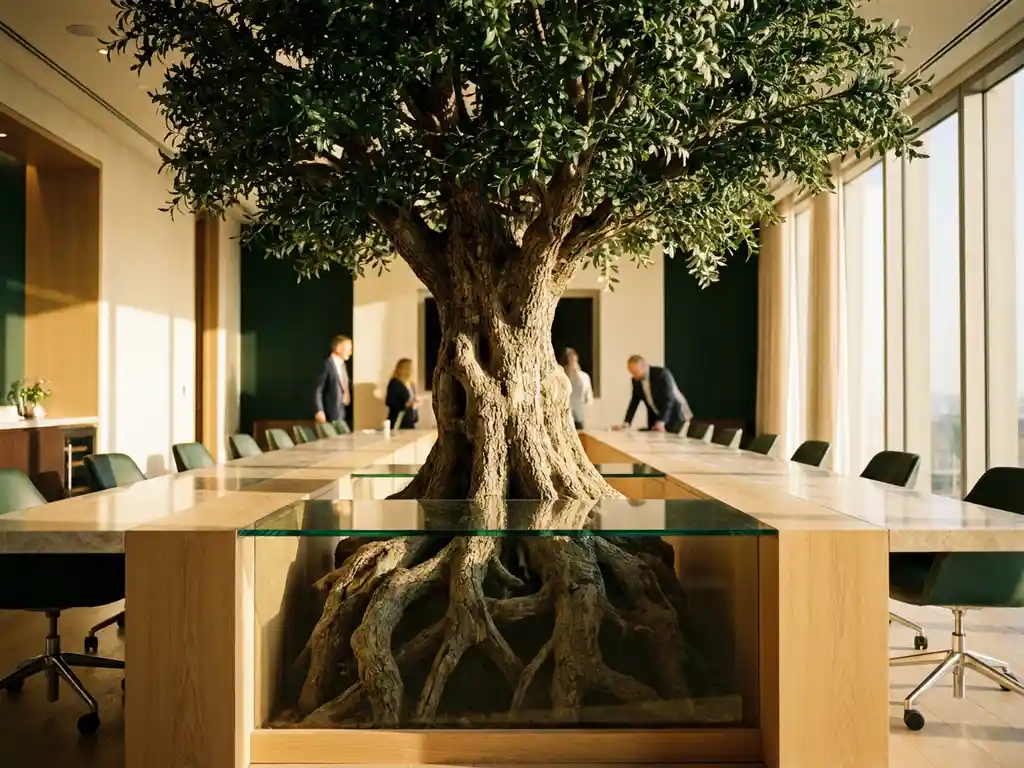
Future-proofing a business with a conscious transformation roadmap means systematically realigning your strategy, leadership, and culture around a higher purpose that creates value for every stakeholder, not just shareholders. For mid-sized companies facing mounting pressure from customers, employees, and regulators in 2026, this approach turns sustainability from a cost centre into a competitive advantage.
What a Conscious Transformation Roadmap Includes
A conscious transformation roadmap is a structured, phased plan that moves a business from profit-only thinking toward a model where financial performance and stakeholder value reinforce each other. It covers five interconnected areas:
- A clearly articulated higher purpose
- Inclusive stakeholder relationships
- Conscious leadership at every level
- A future-proof business model
- A culture built on trust and transparency
The roadmap moves through three phases: Diagnosis (understanding where you currently stand), Design (connecting purpose to business model decisions), and Activation (embedding new behaviours and metrics into daily operations). Each phase produces tangible outputs so leaders can track progress and demonstrate results.
Why This Protects Long-Term Profitability
Conscious business thinking reduces the hidden costs that erode margins over time: employee disengagement, customer churn, regulatory friction, and reputational risk. Companies that invest in a purpose-driven culture consistently report lower recruitment costs, higher retention, and stronger customer lifetime value.
There is also a clear risk-reduction dimension. In 2026, with CSRD reporting requirements expanding across Europe, businesses that have already embedded stakeholder thinking into their operations face far lower compliance costs than those scrambling to retrofit it. On top of that, actively listening to employees, suppliers, and communities surfaces insights that purely financial analysis misses — a source of competitive advantage that rivals find very difficult to replicate.
The key distinction from traditional CSR: CSR is an add-on, while conscious business is a core operating model. CSR asks, “How do we give back?” Conscious business asks, “How do we create value for everyone affected by what we do?” That difference produces fundamentally different decisions — and results.
How to Turn Vision into Concrete Results
Turning a conscious business vision into results requires moving from aspiration to operational specificity. The steps that consistently work:
- Anchor purpose in business language: Link your higher purpose to revenue, retention, and risk metrics your leadership already tracks.
- Map your stakeholder ecosystem: Define what a genuine win looks like for every group affected by your decisions.
- Redesign key processes: Focus on the three to five processes where stakeholder inclusion is currently weakest.
- Build conscious leadership capacity: Develop leaders who can balance competing stakeholder interests and hold complexity.
- Create feedback loops: Give stakeholders regular, meaningful ways to signal whether your commitments are being kept.
- Report transparently: Share progress — including setbacks. Transparency builds the trust that makes transformation sustainable.
Transformation should be led by the CEO, with active co-ownership from the leadership team. Middle managers translate principles into daily decisions, so their genuine buy-in is essential. Peer learning accelerates this: connecting with other leaders navigating the same journey is often more useful than any framework or training programme.
How We Help
We support organisations at every stage of the conscious business transformation journey, from diagnosis through to full activation. Here is what working with us looks like:
- CB Scan: A 15-minute assessment showing exactly where your organisation stands within the conscious business development model
- CB Plan trajectories: Structured programmes — including whitepapers, the CB Activator, and Design Sprints — to build a concrete transformation plan
- Conscious Business Circles: Monthly peer learning sessions where CEOs exchange real experiences and accelerate their development
- Education and tools: Executive training, workshops, and e-learning developed with Impact Centre Erasmus and the Conscious Business Institute
If you want to understand where your organisation stands today, the CB Scan is the fastest way to get a clear picture. Take the 15-minute assessment and walk away with actionable insight into your next steps.
Related Articles
- What are the most common causes of employee disengagement?
- How do you define and activate a company's Higher Purpose?
- Why 87% of European Employees Are Disengaged — And What Conscious Leaders Can Do About It
- How do you build AI ethics framework for conscious organizations?
- How do you use AI for leadership development assessment?