
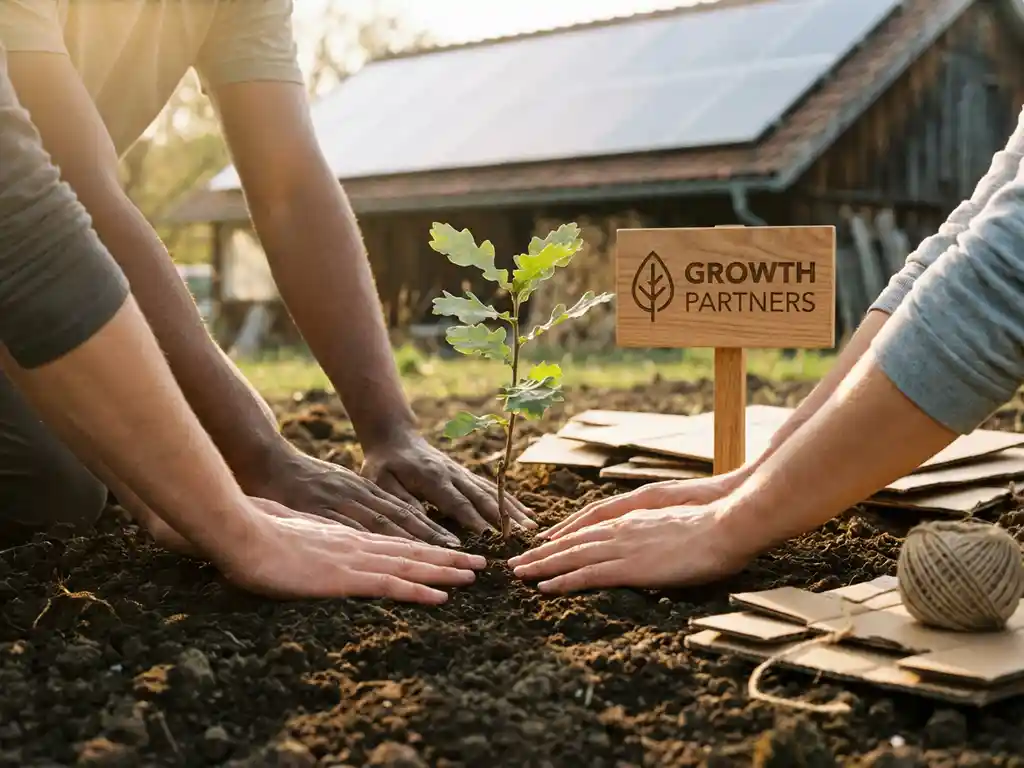
Starting a socially responsible business means building a company that creates value for all stakeholders — employees, customers, communities, suppliers, and shareholders — while staying profitable. It requires clear purpose, a adapted business model, and metrics that go beyond financial performance alone.
What does running a socially responsible business actually mean?
The key difference between genuine social responsibility and superficial CSR is integration. Authentic socially responsible businesses embed their purpose into the core business model — their social mission and commercial operations are inseparable. Superficial CSR, by contrast, treats responsibility as an add-on: charity donations or volunteer days that don’t change how the business actually operates.
Social responsibility can be a genuine competitive advantage:
- Treating employees well leads to higher productivity and lower turnover.
- Prioritizing sustainability often reduces costs through less waste and lower energy use.
- Strong community relationships build brand loyalty and customer retention.
How do you define your purpose and adapt your business model?
Your higher purpose emerges from the intersection of your personal values, market needs, and opportunities for positive impact. Start by asking: what problems are you uniquely positioned to solve? Your authentic purpose often stems from challenges you’ve faced personally or injustices you’ve witnessed.
Once you’ve defined your purpose, adapt your business model around it:
- Value proposition: Solve customer problems while creating social or environmental impact — this often supports premium pricing.
- Supply chain: Choose suppliers who share your values, even if costs are slightly higher.
- Revenue model: Ensure it reinforces rather than conflicts with your social mission.
- Operations: Minimize negative impact through renewable energy, zero-waste policies, or flexible working arrangements.
How do you measure success beyond profit?
Socially responsible businesses track social, environmental, and financial performance together — often called the triple bottom line. Develop stakeholder-focused metrics that reflect your specific goals:
- Employees: satisfaction scores, retention rates, development opportunities.
- Customers: lifetime value, satisfaction ratings, problem resolution.
- Environment: carbon footprint, waste diversion, energy efficiency.
- Social impact: jobs created, access to services improved, local suppliers supported.
Tools like the B Impact Assessment provide structured frameworks to benchmark your performance and identify areas for improvement.
What challenges should you prepare for?
The biggest challenges when starting a socially responsible business include:
- Funding: Many investors focus on short-term returns. Seek patient capital from investors who understand long-term stakeholder value creation.
- Market skepticism: Demonstrate your values through actions, not just claims. Transparency about progress and challenges builds credibility.
- Operational complexity: Balancing multiple stakeholder needs makes decisions more complex. Clear decision-making frameworks help.
- Higher costs: Ethical suppliers, sustainable materials, and fair wages cost more. Build these into your model and communicate the added value to customers.
Businesses that navigate these challenges successfully often enjoy stronger customer loyalty, higher employee engagement, and lasting competitive advantages. Social responsibility isn’t a constraint — it’s a source of innovation and differentiation that creates value for everyone involved.
If you’re ready to assess how conscious your current business approach is, we offer a 15-minute evaluation that helps you understand where you stand and identify opportunities to develop a more stakeholder-focused business model.
Related Articles
- What is a talent retention strategy for senior leaders?
- What is the difference between conscious leadership and traditional leadership?
- How do stakeholder relationships enable co-innovation in business?
- The 5 Pillars Every Business Needs to Thrive Without Sacrificing People or Planet
- What sustainability challenges face food and beverage businesses?