
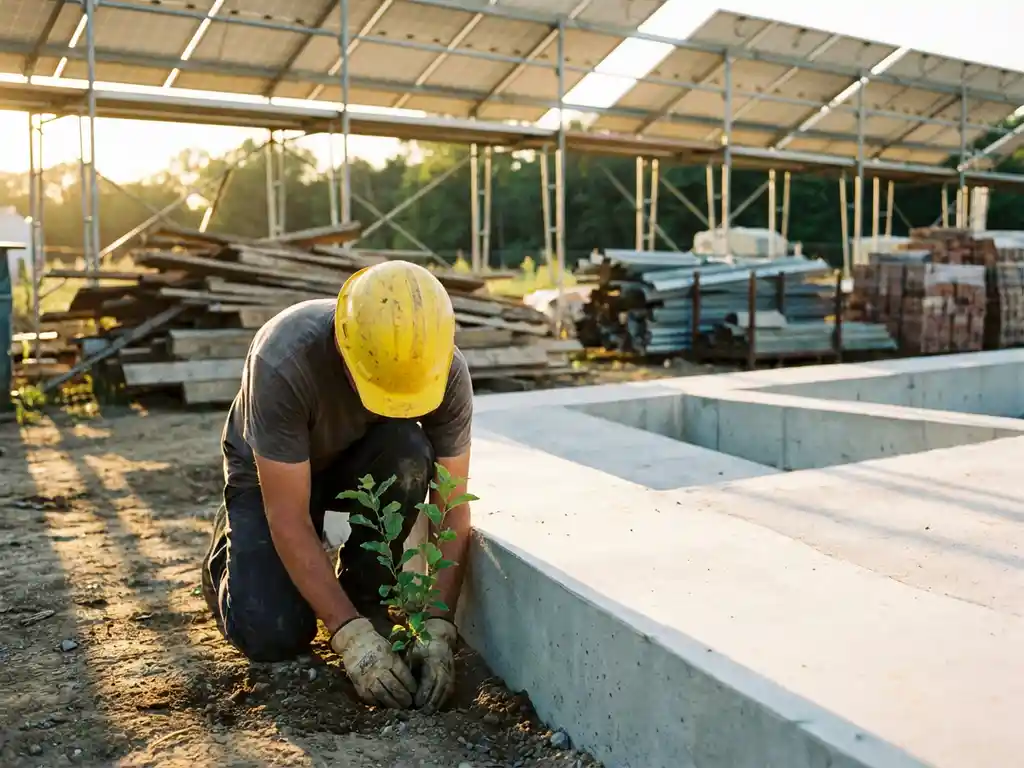
Construction companies can operate more consciously by shifting from a profit-only focus to a stakeholder-inclusive approach that balances financial success with social and environmental responsibility. Conscious construction creates value for workers, communities, clients, and the environment — simultaneously.
What does conscious construction mean?
Conscious construction means operating with a higher purpose beyond profit maximisation. Instead of focusing solely on quarterly returns, conscious companies ask: “How has our business made the world better?” This approach is built on five core pillars:
- Higher purpose — a clear mission that inspires stakeholders and guides decisions
- Conscious leadership — emotionally intelligent leaders who consider long-term impact
- Stakeholder inclusion — actively involving all parties affected by your work
- Sustainable business model innovation — rethinking how value is created and delivered
- Shared values culture — transparency, integrity, and environmental stewardship as daily practice
Why does it matter for your business?
Conscious construction is not just the right thing to do — it delivers measurable business benefits:
- Higher engagement: conscious businesses can achieve up to 90% employee engagement, compared to a European average of just 13%
- Stronger talent attraction: purpose-driven companies consistently outperform competitors in recruiting and retaining skilled workers
- Regulatory readiness: proactively adopting sustainable practices reduces compliance costs as legislation tightens across Europe
- Better project wins: clients — especially younger demographics — increasingly prioritise environmental and social impact alongside cost and timeline
- Reduced risk: stronger community relationships, improved supply chain resilience, and fewer environmental liabilities prevent costly delays
How do you measure success beyond profit?
Conscious construction requires multiple metrics that capture value across all stakeholder groups. Financial performance remains important, but sits within a broader framework that includes:
- Worker wellbeing: accident rates, near-miss reporting, satisfaction scores, and retention
- Community impact: local employment, supplier diversity, and community satisfaction
- Environmental performance: carbon footprint, waste diversion, water efficiency, and biodiversity impact
- Client value: lifecycle performance, sustainability targets, and long-term relationship development
- Business resilience: employee engagement, innovation capacity, and stability during market downturns
These metrics are interconnected, not competing. When stakeholder success aligns with business success, improved performance in one area reinforces progress across all others.
Ready to get started?
Transitioning to conscious construction requires commitment and systematic implementation — but companies that make this shift position themselves for long-term success while contributing meaningfully to social and environmental challenges. At Conscious Business, we support construction companies through this transformation with practical tools, peer learning, and structured development programmes. To begin your journey, take our Conscious Business scan to assess your current position and identify key areas for development.