
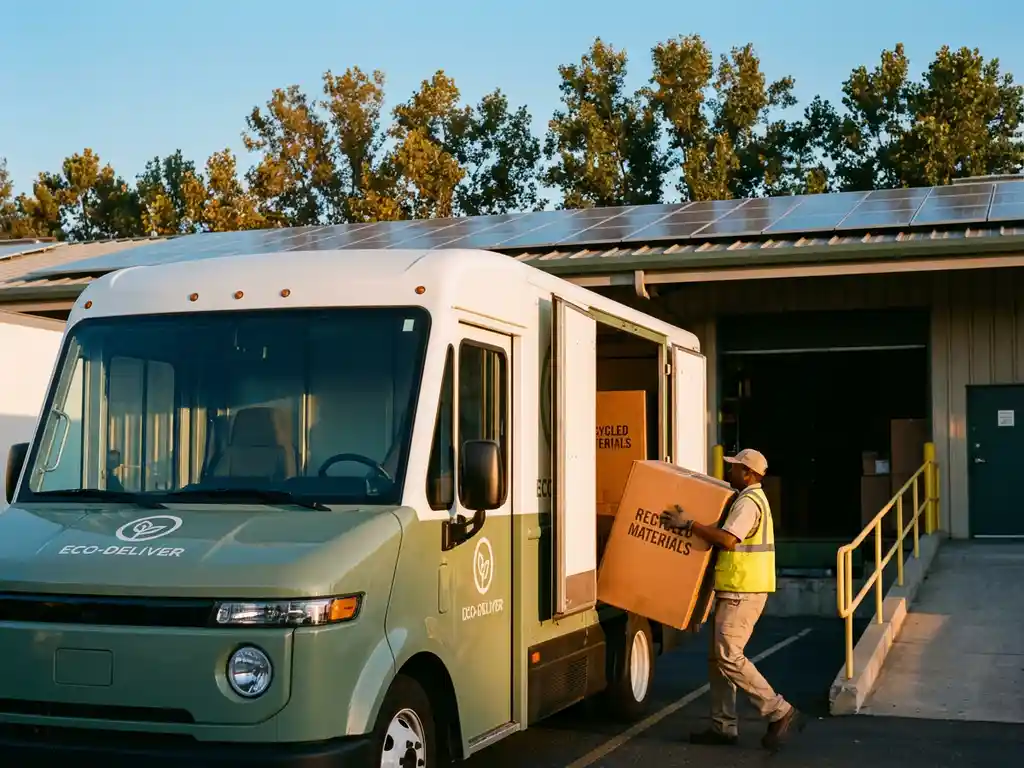
Sustainable logistics combines environmental responsibility with operational efficiency to create long-term value. It means reducing carbon emissions, optimising resource use, and building resilient supply chains — while staying profitable and meeting growing regulatory and customer demands.
What sustainable logistics means for your business
Sustainable logistics means running your supply chain in a way that protects the environment, supports communities, and remains economically viable. It rests on three pillars: environmental stewardship, social responsibility, and economic sustainability.
The difference between genuine sustainable logistics and greenwashing lies in measurable action. Real sustainability requires systemic changes to core processes — route planning, vehicle selection, warehouse operations, and supplier relationships — not surface-level adjustments for marketing purposes.
It also means building resilience. Climate change and resource scarcity create supply chain risks that traditional logistics models often ignore. Adopting sustainable practices now prepares your business for future challenges while delivering immediate benefits such as reduced fuel costs and improved efficiency.
Why act now?
Pressure to go green is coming from multiple directions:
- Regulation: Frameworks such as the CSRD require many companies to report on environmental and social impact.
- Customer expectations: B2B and B2C customers increasingly choose partners based on environmental credentials. Major retailers are setting carbon-neutral targets for their entire supply chains.
- Economics: Rising fuel costs and carbon pricing make energy-efficient operations financially attractive. Sustainable practices often reveal hidden inefficiencies, leading to additional cost savings.
- Competitive advantage: Early adopters secure sustainability-focused partnerships, attract top talent, and build brand reputation that commands premium pricing.
How to reduce your environmental footprint
There are several practical ways to lower the environmental impact of your logistics operations:
- Route optimisation: Modern software reduces fuel consumption by 10–20% while improving delivery performance.
- Vehicle selection: Electric vehicles suit urban deliveries; hybrids work well for mixed routes. For long-haul transport, explore newer diesel engines or alternative fuels such as biodiesel or hydrogen.
- Warehouse energy management: LED lighting, smart heating and cooling systems, and solar panels significantly cut energy use and costs.
- Packaging optimisation: Right-sizing packages, using reusable systems, and switching to biodegradable or recyclable materials reduce waste throughout the supply chain.
- Modal shift: Rail produces lower emissions per tonne-kilometre than road for longer distances. Consolidating shipments and using intermodal solutions further reduce environmental impact.
Measuring your progress
Tracking sustainability requires metrics across three dimensions:
- Environmental: Carbon emissions per delivery, fuel consumption per kilometre, energy usage per square metre of warehouse space.
- Social: Employee satisfaction, safety incident rates, local supplier percentages.
- Economic: Cost per delivery, return on sustainability investments, customer retention rates.
Start with a few key metrics aligned to your business priorities, then expand as you gain experience. Reporting standards such as GRI and CDP ensure consistency and credibility. Regular performance reviews, industry benchmarking, and employee feedback help you continuously improve your sustainable delivery methods.
Sustainable logistics is both a business necessity and a genuine competitive opportunity. Companies that embrace this transition thoughtfully — measuring progress and adapting based on real results — position themselves for long-term success. At Conscious Business, we help logistics companies navigate this transformation by balancing environmental responsibility with operational excellence and financial performance. Ready to start? YOUR ANCHORWORD to discover how our comprehensive assessment can guide your path to sustainable logistics success.