
What are the key indicators of organizational consciousness levels?

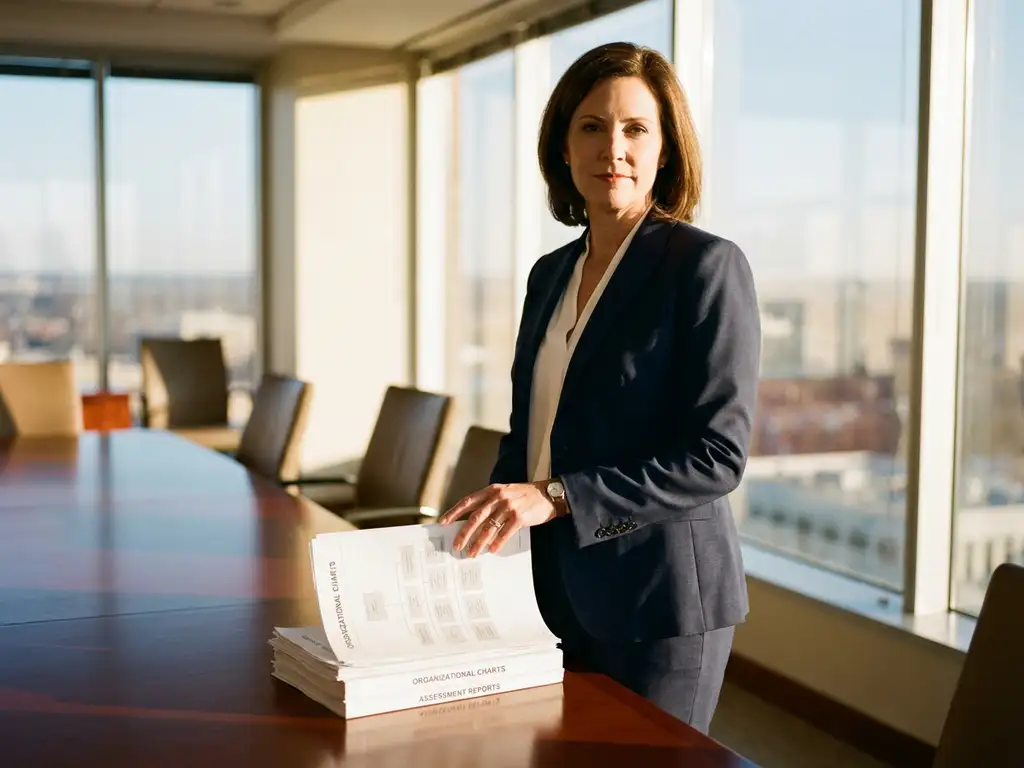
Professional businesswoman in navy suit standing confidently at boardroom table with organizational charts and documents.

Organizational consciousness levels reflect how deeply a company integrates stakeholder value, ethical decision-making, and purpose-driven practices into its operations. Key indicators include leadership behavior, stakeholder relationships, decision-making processes, and cultural values that demonstrate a genuine commitment to creating value for all stakeholders rather than maximizing short-term profits alone.

What exactly defines organizational consciousness and why does it matter?

Organizational consciousness represents a company’s awareness of its impact on all stakeholders and its commitment to creating value beyond financial returns. Unlike traditional business metrics that focus primarily on shareholder value, conscious organizations measure success across multiple dimensions, including employee well-being, customer satisfaction, supplier relationships, community impact, and environmental stewardship.

This matters because consciousness provides the foundation for sustainable success in today’s interconnected business environment. Conscious organizations demonstrate three times higher levels of transformational thinking compared to traditional businesses, focusing on fundamental value creation rather than incremental improvements. They recognize that long-term profitability depends on healthy relationships with all stakeholders, not just shareholders.

The distinction becomes particularly evident in how organizations approach new technologies like AI. Conscious businesses ask, “How does this help us fulfill our purpose?” before implementing any system, whereas less conscious organizations may deploy technology without considering broader stakeholder impacts. This foundational difference determines whether innovation amplifies positive organizational qualities or exposes underlying weaknesses.

How can you assess your organization’s current consciousness level?

Assessing organizational consciousness requires examining both observable behaviors and the underlying systems that drive decision-making. Start by evaluating how decisions are made: do they consider multiple stakeholders, or do they focus solely on financial metrics? Look at leadership communication patterns, employee engagement levels, and how the organization responds to challenges and opportunities.

A systematic assessment examines five key areas: purpose clarity (does everyone understand why the organization exists beyond profit?), stakeholder relationships (are they transactional or transformational?), leadership consciousness (do leaders demonstrate emotional, systems, and ethical intelligence?), business model sustainability (does it create value for all stakeholders?), and cultural health (is there trust, psychological safety, and authentic communication?).

Tools like the CB Scan provide structured evaluation frameworks that measure consciousness across these dimensions. This 15-minute assessment reveals how consciously an organization operates within a systematic development model, offering insights into current consciousness levels and identifying areas for growth. The assessment helps organizations understand their position on the consciousness spectrum and creates a baseline for measuring progress.

What are the most telling behavioral indicators of a conscious organization?

The most revealing indicators appear in daily decision-making processes and stakeholder interactions. Conscious organizations consistently demonstrate transformational thinking rather than purely incremental improvements, asking how they can fundamentally better serve stakeholders rather than simply cutting costs or maximizing efficiency.

Decision-making transparency stands out as a key indicator. Conscious organizations openly share the reasoning behind decisions, acknowledge trade-offs, and explain how different stakeholder interests were considered. They don’t hide behind corporate speak or deflect difficult questions. When mistakes occur, they take responsibility quickly and focus on learning rather than blame.

Another telling sign is how organizations handle conflicts between stakeholder interests. Conscious businesses actively seek win-win-win solutions, investing time and creativity to find approaches that benefit multiple parties. They view stakeholder tensions as innovation opportunities rather than zero-sum games. This shows up in everything from supplier negotiations to employee policy development to customer service recovery.

The treatment of data and technology reveals consciousness levels clearly. Organizations with higher consciousness involve stakeholders in designing AI systems rather than imposing them, recognizing that sustainable success requires trust and engagement from those affected by technological changes.

How do conscious organizations handle stakeholder relationships differently?

Conscious organizations view stakeholders as partners in value creation rather than resources to be optimized. With employees, this means moving beyond engagement surveys to genuine co-creation of workplace policies, career development paths, and organizational improvements. Employees become active contributors to strategic decisions rather than passive recipients of management directives.

Customer relationships shift from transactional to collaborative. Instead of simply selling products or services, conscious organizations involve customers in product development, share data transparently, and create value that extends beyond the immediate transaction. They build trust that enables deeper data sharing and collaboration, creating competitive advantages that cannot be easily replicated.

Supplier relationships transform from cost-focused negotiations to innovation partnerships. Conscious businesses recognize that supply chain optimization requires trust-based data sharing across the entire network. They invest in long-term supplier relationships, share benefits from improvements, and collaborate on sustainability initiatives that benefit the entire value chain.

Community and environmental stakeholders receive genuine consideration in decision-making processes. Rather than treating social and environmental impact as compliance requirements, conscious organizations proactively engage these stakeholders and measure success across multiple dimensions. This approach often reveals innovation opportunities and helps organizations stay ahead of regulatory changes.

What role does leadership play in organizational consciousness development?

Leadership consciousness directly determines organizational consciousness levels because leaders model the behaviors and decision-making patterns that become embedded in organizational culture. Conscious leaders demonstrate three times higher levels of ownership and commitment to transformational initiatives by actively role-modeling the behaviors they want to see throughout the organization.

Conscious leadership requires three types of intelligence working together. Emotional intelligence helps leaders recognize and address the fears and concerns that arise during organizational change, creating psychological safety where people can express concerns and contribute ideas. Systems intelligence enables leaders to see how decisions ripple through the entire stakeholder ecosystem, leading to more thoughtful and sustainable choices.

Spiritual intelligence guides leaders in making ethical decisions when data and logic alone aren’t sufficient. This becomes particularly important with new technologies, where leaders must decide not just what they can do, but what they should do, given their values and stakeholder commitments.

The development process involves leaders at all levels, not just senior management. Conscious organizations invest in building leadership capabilities throughout the hierarchy, recognizing that consciousness must be distributed rather than concentrated at the top. This creates resilience and ensures that conscious practices continue even as individual leaders change roles.

How do you measure progress in organizational consciousness transformation?

Measuring consciousness progress requires both quantitative metrics and qualitative assessments that capture the multidimensional nature of conscious business practices. Traditional financial metrics remain important but become part of a broader measurement framework that includes stakeholder satisfaction, employee engagement, innovation rates, and environmental impact indicators.

Behavioral indicators provide concrete evidence of progress. Track decision-making processes: are more stakeholders being consulted? Are decisions taking longer-term impacts into account? Monitor communication patterns: is there increased transparency and authentic dialogue? Observe conflict resolution: are win-win solutions becoming more common?

Employee engagement and trust levels serve as leading indicators of consciousness development. Organizations with high-trust cultures demonstrate significantly faster adoption of new initiatives and higher success rates with transformational changes. Regular pulse surveys can track psychological safety, sense of purpose alignment, and willingness to contribute ideas for improvement.

Stakeholder feedback provides external validation of consciousness progress. Customer satisfaction scores, supplier relationship quality assessments, and community impact measurements reveal whether consciousness development is creating real value beyond the organization’s boundaries. The key is measuring relationships and value creation, not just transactions and efficiency metrics.

Regular consciousness assessments, such as the CB Scan, provide systematic progress tracking over time. These tools measure development across all consciousness dimensions and help identify areas where progress is strong and where additional focus is needed. The assessment creates accountability and helps maintain momentum in consciousness development efforts.

Understanding and developing organizational consciousness requires ongoing attention and systematic assessment. The indicators explored here provide a framework for evaluating current consciousness levels and tracking progress toward more conscious business practices. Organizations that invest in developing consciousness across these dimensions build sustainable competitive advantages while creating genuine value for all stakeholders. The journey toward higher consciousness is not a destination but an ongoing process of growth and development that benefits everyone involved. To begin your organization’s consciousness journey, take the CB Scan assessment and discover where your organization stands today.

Related Articles