
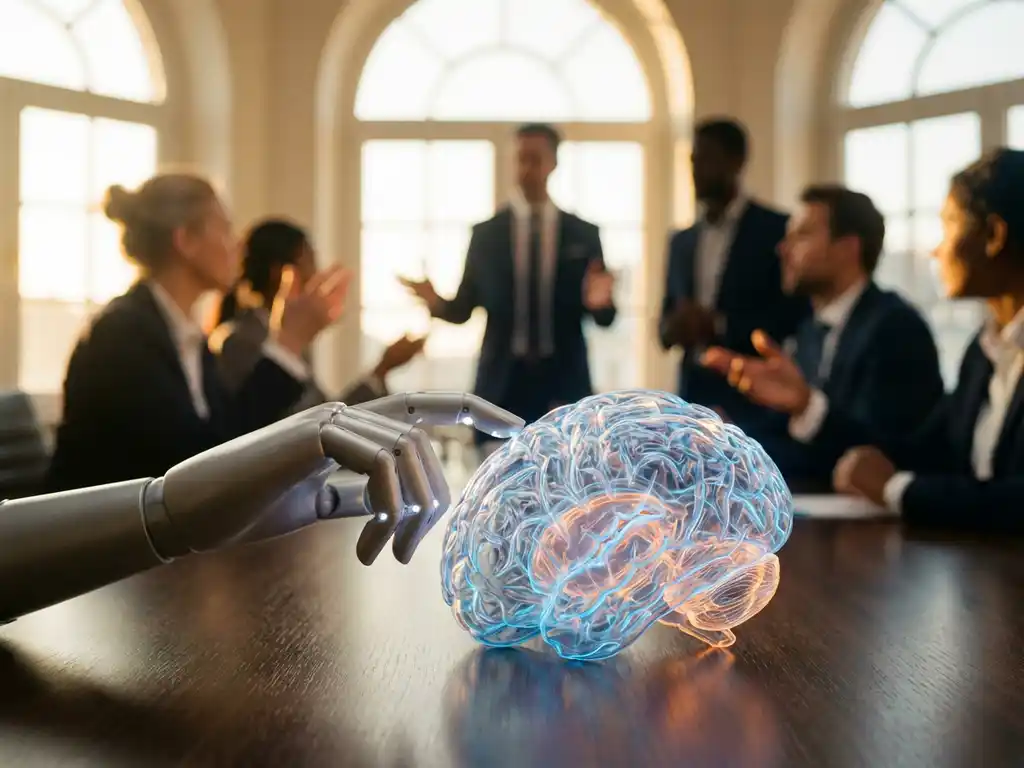
Integrating AI into conscious culture change programmes means combining artificial intelligence with values-driven transformation that prioritises stakeholder wellbeing. Done right, AI enhances human development rather than replacing human connection — but success depends on ethical frameworks, employee co-creation, and transparent measurement systems.
What does conscious AI integration actually mean?
Conscious AI integration means embedding technology within transformation programmes whilst keeping human values, stakeholder inclusion, and ethical decision-making at the centre. Values act as guardrails: if transparency is a core value, employees must be able to understand how AI-driven decisions are made. If fairness matters, algorithms need built-in bias detection.
Rather than imposing AI from the top down, conscious organisations involve employees as co-creators. This approach surfaces tacit knowledge no algorithm can discover independently — and it builds the trust that makes AI work. Employees only share high-quality data when they believe it will be used responsibly. Without that trust, people game systems and undermine AI effectiveness.
Supporting leadership development and employee engagement ethically
AI can strengthen conscious leadership development through personalised learning paths, continuous feedback, and coaching support — as long as technology amplifies authentic relationships rather than replacing them. The most valuable use of AI-generated feedback is as a starting point for human conversations with coaches, mentors, and peers.
The critical distinction is positioning AI as a tool for empowerment, not control. Engaged employees see AI as helping them perform better; disengaged employees see it as a threat. Culture determines whether AI investments succeed or fail.
Ethical implementation in employee engagement programmes requires:
- Transparency about what data is collected, how it is used, and who has access
- Bias auditing to prevent AI from reinforcing existing inequalities
- Clear data governance covering retention, sharing, and deletion
- Employee involvement in designing systems that affect them
In values-driven cultures, the guiding question shifts from “What can this AI do?” to “Should this AI do this, given our values?” That shift prevents ethical drift as technology capabilities expand.
Measuring culture transformation with AI
The most effective technologies for tracking conscious culture change include sentiment analysis, natural language processing, and network analysis. These tools identify organisation-wide patterns — such as growing collaboration or purpose-driven language — without invasive individual monitoring.
Assessment tools like the CB Scan can be enhanced with AI to benchmark progress against conscious business frameworks and suggest targeted interventions. Network analysis can reveal whether hierarchical barriers are breaking down and whether cross-departmental collaboration is genuinely increasing.
The principle of AI ethics in conscious capitalism applies directly here: measurement must serve development, not surveillance. When employees trust that data is used constructively, they contribute more openly — creating a virtuous cycle of better data, more effective interventions, and stronger culture.
Where to start
Successful AI integration in conscious culture change rests on three foundations: trust, transparency, and a clear commitment to human flourishing. Organisations that master this balance gain sustainable competitive advantages that technology alone cannot replicate. To begin your organisation’s journey towards conscious AI integration, consider starting with a comprehensive assessment of your current consciousness levels.
Related Articles
- How does lack of purpose create a growth ceiling for companies?
- How does conscious business transformation impact customer loyalty?
- How do you pivot while maintaining your values?
- How Purpose-Driven Companies Grow 2.5x Faster Than Their Competitors
- Can AI help measure organizational consciousness levels?