
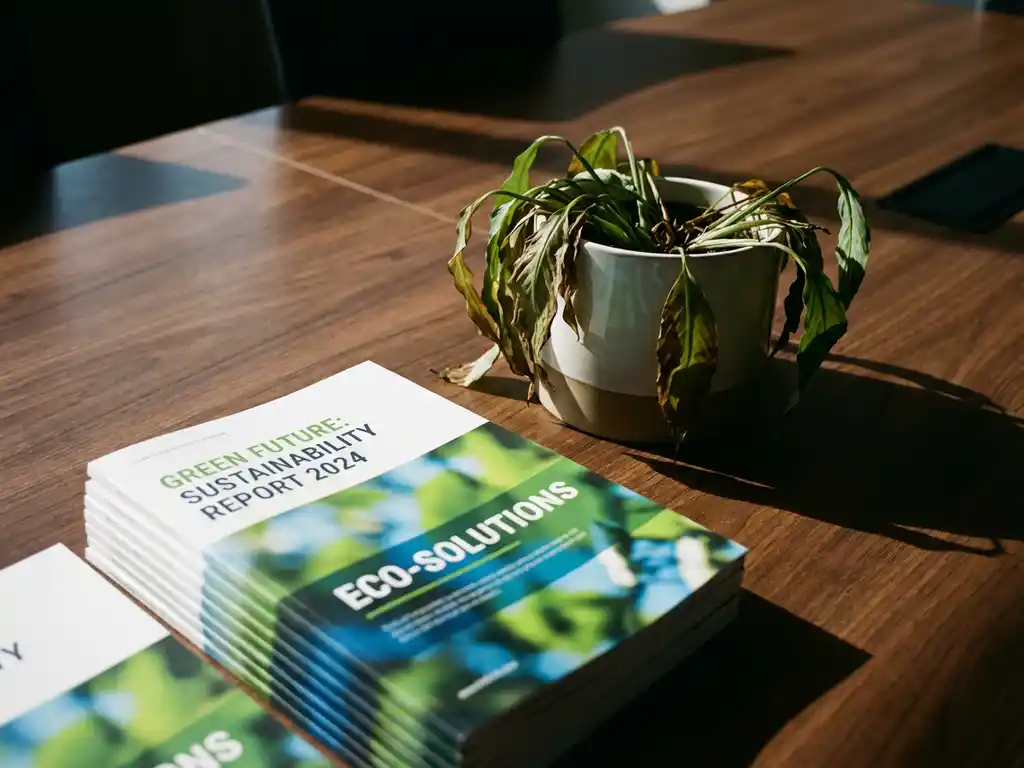
Your company’s sustainability messaging might be doing more harm than good. While you’re investing in green initiatives and promoting environmental responsibility, stakeholders are becoming increasingly sophisticated at spotting superficial efforts. The gap between authentic sustainable business practices and performative environmental claims has never been more visible, and the consequences for brand credibility are severe.
This article explores how greenwashing undermines brand reputation, provides practical methods for identifying these tendencies in your own operations, and presents a conscious business approach that builds genuine stakeholder trust through authentic sustainability practices.
What is greenwashing and why does it backfire?
Greenwashing occurs when companies present an environmentally responsible image without implementing meaningful sustainable practices. Common examples include using misleading environmental claims in marketing, highlighting minor green initiatives while ignoring major environmental impacts, or adopting superficial changes like green packaging while maintaining unsustainable core operations.
The practice backfires because today’s stakeholders have unprecedented access to information about corporate sustainability. Employees, customers, and investors can easily research company practices beyond marketing messages. When they discover disconnects between claims and reality, the resulting damage to brand reputation far exceeds any short-term marketing benefits.
Modern stakeholders expect transparency and authenticity. They understand that genuine environmental responsibility requires systemic changes, not cosmetic adjustments. When companies fail to deliver on sustainability promises, they face backlash from increasingly conscious consumers who view greenwashing as deceptive and manipulative.
The hidden costs of greenwashing on brand trust
Greenwashing creates cascading effects throughout your organisation that extend far beyond marketing concerns. Stakeholder confidence erodes when environmental claims don’t align with observable business practices, leading to decreased customer loyalty and reduced employee engagement.
Customer relationships suffer when people feel misled about your environmental commitments. Research indicates that conscious consumers actively avoid brands they perceive as inauthentic, often sharing negative experiences through social media and word-of-mouth networks. This amplifies reputational damage beyond immediate customer relationships.
Employee engagement also declines when staff recognise disconnects between company messaging and actual practices. Workers, particularly younger generations, seek meaningful employment with organisations that demonstrate genuine purpose. When they perceive greenwashing, it undermines their connection to the company’s mission and reduces their willingness to contribute discretionary effort.
The long-term reputational risks compound over time. Once stakeholders label your organisation as engaging in greenwashing, rebuilding trust requires extensive effort and authentic change. The initial investment in superficial sustainability measures is wasted when deeper transformation becomes necessary to restore credibility.
How to identify greenwashing in your own business practices
Recognising greenwashing tendencies requires honest self-assessment across multiple dimensions of your business operations. Warning signs include focusing exclusively on easily visible changes while avoiding more challenging systemic improvements.
Examine whether your sustainability initiatives address core business impacts or merely peripheral activities. If your environmental efforts concentrate on office recycling programmes while ignoring supply chain impacts or product lifecycle considerations, you may be engaging in superficial sustainability.
Consider the proportion of resources allocated to sustainability communication versus actual implementation. When marketing budgets for environmental messaging exceed investments in sustainable operations, this indicates potential greenwashing. Authentic sustainability requires substantial operational changes, not just communication adjustments.
Evaluate stakeholder feedback and engagement levels. If customers, employees, or community members express scepticism about your environmental commitments, their perspectives may reveal gaps between intentions and implementation. External viewpoints often identify inconsistencies that internal teams overlook.
Assessment tools like our CB Scan can help identify where your organisation stands across multiple dimensions of conscious business practices, including authentic environmental responsibility integrated with broader stakeholder considerations.
Building authentic sustainability that strengthens credibility
Authentic sustainability requires integrating environmental responsibility into core business operations rather than treating it as an add-on marketing strategy. This means examining your entire value chain and making systemic changes that genuinely reduce environmental impact.
Transparent communication builds stakeholder trust when it accurately reflects both achievements and ongoing challenges. Rather than presenting perfection, acknowledge areas where improvement is needed while demonstrating concrete progress toward meaningful goals. This honesty resonates more strongly with stakeholders than polished marketing messages.
Engage stakeholders in your sustainability journey by seeking their input and feedback. Employees often have valuable insights about operational improvements, while customers can provide perspective on product lifecycle impacts. This collaborative approach ensures your efforts address real concerns rather than perceived priorities.
Measure and report progress using credible metrics that stakeholders can verify. Focus on outcomes rather than activities, demonstrating actual environmental improvements rather than simply listing initiatives. This evidence-based approach builds confidence in your commitment to genuine change.
The conscious business alternative to greenwashing
Conscious business models naturally avoid greenwashing by integrating stakeholder inclusion and higher purpose into core operations. This holistic approach measures success across all stakeholder groups, creating alignment between environmental responsibility and business performance.
When companies operate with an authentic higher purpose that extends beyond profit maximisation, environmental considerations become integral to decision-making rather than afterthoughts. This purpose-driven approach ensures sustainability efforts serve genuine stakeholder needs rather than marketing objectives.
The conscious business framework emphasises stakeholder inclusion, recognising that environmental challenges require collaborative solutions. By engaging employees, suppliers, customers, and communities in sustainability efforts, companies develop more comprehensive and effective approaches than isolated internal initiatives.
This systematic approach creates positive feedback loops in which environmental improvements enhance stakeholder relationships, which in turn support business performance. Rather than viewing sustainability as a cost centre, conscious businesses recognise environmental responsibility as a source of innovation, efficiency, and competitive advantage.
The transition toward conscious business practices begins with an honest assessment of current operations and an authentic commitment to creating stakeholder value. Through tools like the CB Scan and structured development programmes, organisations can build genuine sustainability practices that strengthen rather than undermine brand credibility.
Moving beyond greenwashing requires the courage to examine your business practices honestly and the commitment to make necessary changes. The investment in authentic sustainability pays dividends through enhanced stakeholder trust, improved employee engagement, and stronger long-term business performance. The question isn’t whether to make this transition, but how quickly your organisation can begin building genuine conscious business practices. Start by taking our CB Scan to understand where your organisation currently stands and identify the most impactful areas for authentic transformation.
Related Articles
- What is the difference between traditional and conscious AI implementation?
- What do you do when values conflict with profitability?
- 5 signs your company needs a triple bottom line assessment
- How do conscious practices affect profit margins?
- The Heroes of Business Past Are the Villains of Today — Is Your Company Next?

