
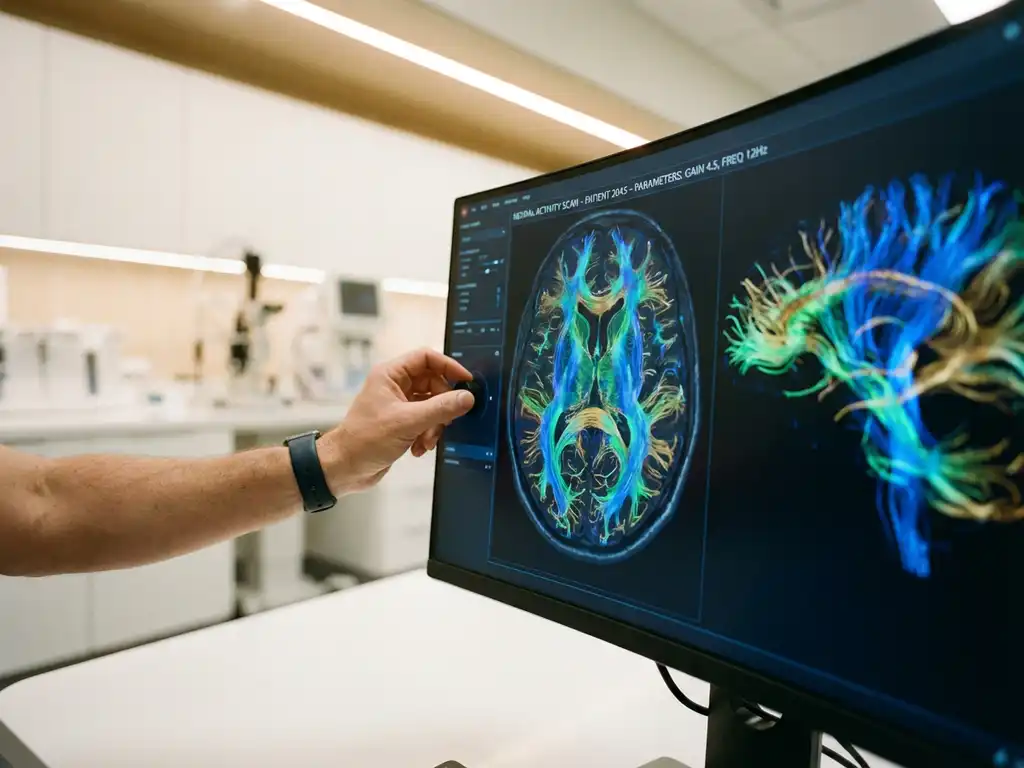
AI-powered consciousness assessment combines artificial intelligence with organisational awareness evaluation to measure how consciously a business operates. These tools analyse leadership patterns, stakeholder relationships, and decision-making frameworks to provide comprehensive insights — going well beyond what traditional business metrics can capture.
How does AI-powered consciousness assessment work?
The technology collects data from multiple organisational touchpoints — employee communications, leadership decisions, stakeholder interactions, and business processes. Machine learning algorithms then identify patterns that indicate conscious leadership behaviours, stakeholder inclusion practices, and purpose-driven decision-making.
Organisations are evaluated against established consciousness frameworks, measuring factors such as:
- Alignment with a higher organisational purpose
- Ethical decision-making and stakeholder consideration
- Cultural health and values integration
- Authentic versus performative leadership behaviours
By processing both quantitative metrics and qualitative indicators, AI creates comprehensive consciousness profiles that reveal how genuinely an organisation embodies conscious business principles.
Why traditional assessments fall short
Conventional evaluation methods focus primarily on financial metrics and operational efficiency, missing the holistic nature of conscious business practices. They rely heavily on self-reported data and subjective questionnaires, which are vulnerable to social desirability bias — leaders often report what they think assessors want to hear rather than organisational reality.
Traditional approaches also fail to capture the dynamic nature of consciousness development. They provide static snapshots rather than treating consciousness as an evolving capability that requires continuous measurement. AI assessment addresses this by tracking development over time and identifying how AI ethics in conscious capitalism principles are genuinely embedded throughout an organisation.
What insights and transformation value does it deliver?
AI-powered consciousness assessment provides actionable insights across several key areas:
- Culture and engagement: Identifies how consciousness levels correlate with innovation capacity and performance outcomes
- Stakeholder alignment: Reveals gaps between stated values and actual practices across all organisational levels
- AI integration: Measures whether conscious AI implementation strategy principles guide technology deployments
- Transformation leverage points: Maps where small improvements in consciousness create the greatest business impact
Research indicates that organisations with stronger consciousness foundations achieve significantly better results when implementing new technologies and business model innovations.
How to implement it in your organisation
Successful implementation starts with clear assessment objectives and genuine leadership commitment to act on findings. From there, the process involves:
- Establishing a baseline using a comprehensive organisational consciousness scan
- Involving diverse stakeholders — employees, customers, suppliers, and community representatives
- Setting up regular assessment cycles to track consciousness development over time
- Integrating findings into existing business planning and development processes
This ongoing approach ensures that consciousness insights translate into concrete actions that strengthen organisational foundations and support sustainable growth. Ready to begin? Start with a comprehensive consciousness assessment to establish your baseline and unlock your transformation potential.
Related Articles
- What are the best frameworks for measuring social and cultural business impact?
- How does the Conscious Business approach support culture transformation?
- What are the biggest obstacles to conscious business model adoption?
- How can construction companies operate more consciously?
- How do conscious businesses compete with cheaper alternatives?